

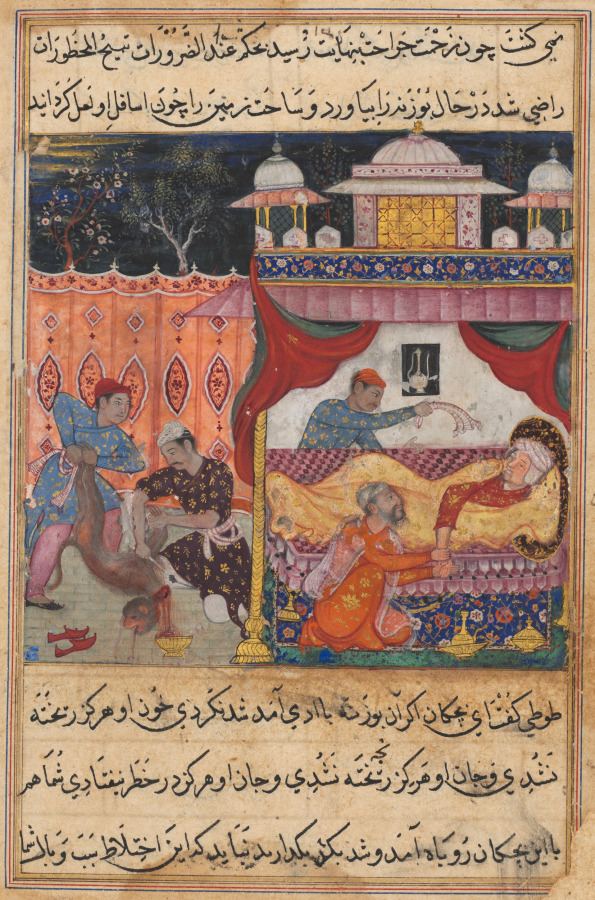

Basawan
Basawan was an artist. Solis Prints offers the following prints by this artist: Ascetics Making Bhang, Jain Ascetic Walking Along a Riverbank - Basavana, The Hunter and the King - Basavana, The Hunter and the Parrots - Basavana, and The Siege of Arbela in the Era of Hulagu Khan - Basavana.
Notable Works
Tap to view larger.
Next stop
Browse the movements →
Every movement in the collection, from the Renaissance to Pop art.
Basawan prints
Hand-finished archival prints from Basawan's body of work.
 The Young Emperor Akbar Arrests the Insolent Shah Abu’l-Maali - Basawan
From £28.00
The Young Emperor Akbar Arrests the Insolent Shah Abu’l-Maali - Basawan
From £28.00
 Page from Tales of a Parrot (Tuti-nama) - Basavana
From £28.00
Page from Tales of a Parrot (Tuti-nama) - Basavana
From £28.00
 A feast for Babur hosted by his half-brother Jahangir Mirza in Ghazni in May 1505 - Basavana
From £28.00
A feast for Babur hosted by his half-brother Jahangir Mirza in Ghazni in May 1505 - Basavana
From £28.00
 The Donkey in Tiger's Skin - Basavana
From £28.00
The Donkey in Tiger's Skin - Basavana
From £28.00
 The Siege of Arbela in the Era of Hulagu Khan - Basavana
From £28.00
The Siege of Arbela in the Era of Hulagu Khan - Basavana
From £28.00
 Jain Ascetic Walking Along a Riverbank - Basavana
From £28.00
Jain Ascetic Walking Along a Riverbank - Basavana
From £28.00
Take Basawan home.
See all Basawan prints →Frequently Asked Questions
What is Basawan known for?
Basawan is known for basawan was an artist whose work is available as fine art prints at Solis Prints.