

Abraham-Louis-Rodolphe Ducros
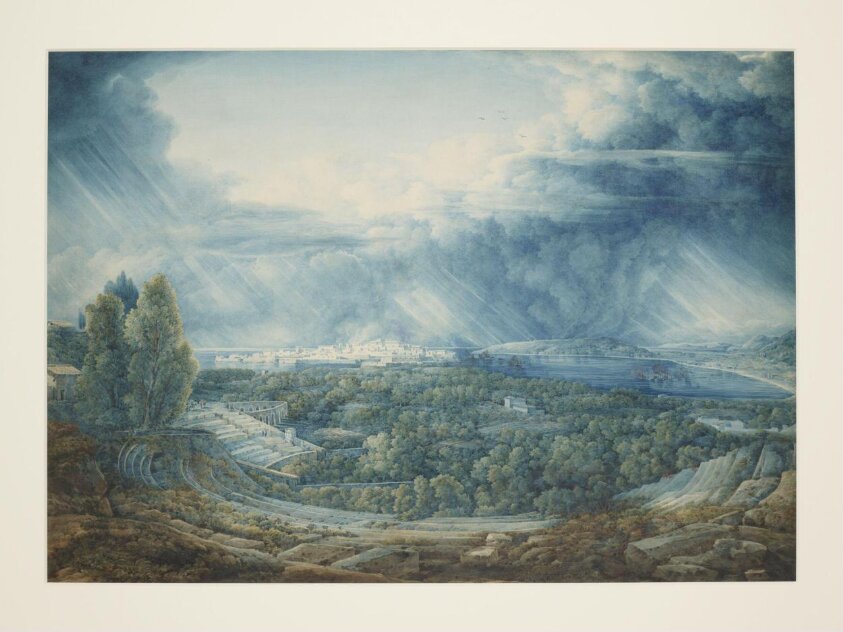
Abraham-Louis-Rodolphe Ducros produced watercolours on a scale that surprised his eighteenth-century contemporaries. He frequently joined multiple sheets of paper together and mounted them on canvas to create works over a metre wide. This technique allowed him to produce large-format scenes that rivalled oil paintings in their visual weight. Many of these pieces were sold to British aristocrats during their Grand Tour travels. His clients often displayed these works without glass, treating them as permanent fixtures of their country house galleries.
Biography
The artist abandoned the light, sketch-like quality typical of the medium in his era. He applied heavy washes and gum arabic to achieve dark tones and atmospheric depth. This approach defined his views of the Roman Campagna and the waterfalls at Tivoli. His style anticipated the Romantic movement by focusing on the scale of nature against ancient ruins. He used a palette of ochre and grey to define the structure of classical architecture.
Modern collectors value these prints for their architectural clarity and calm atmosphere. The works provide a window into the Mediterranean world before the arrival of modern industry. His depictions of the Colosseum or the Temple of Vesta remain popular for their topographical detail and soft light. These images suit contemporary rooms that require a sense of history and open space.
Notable Works
Tap to view larger.
Next stop
Browse the movements →
Every movement in the collection, from the Renaissance to Pop art.
Frequently Asked Questions
What is Abraham-Louis-Rodolphe Ducros known for?
Abraham-Louis-Rodolphe Ducros is known for abraham-Louis-Rodolphe Ducros was a Swiss painter who transformed watercolour into a large-scale medium, capturing the ruins and waterfalls of Italy for Grand Tour travellers.