

Collection
Suzuki Harunobu
Explore curated art prints selected for distinctive homes and considered interiors.
Suggested filters
-

 Three Children with Three Fighting Cocks - Suzuki Harunobu
Print · Framed
Regular price From £28.00 GBPSale price From £28.00 GBP Regular price -

 Young Woman Tying Obi Beside Bamboo Bench - Suzuki Harunobu
Print · Framed
Regular price From £28.00 GBPSale price From £28.00 GBP Regular price -

 Girl Practicing Calligraphy representing Knowledge (Chi) - Suzuki Harunobu
Print · Framed
Regular price From £28.00 GBPSale price From £28.00 GBP Regular price -

 Girl Playing Koto by Chigaidana - Suzuki Harunobu
Print · Framed
Regular price From £28.00 GBPSale price From £28.00 GBP Regular price -

 Parody of Lin Heqing (Rinnasei) - Suzuki Harunobu
Print · Framed
Regular price From £28.00 GBPSale price From £28.00 GBP Regular price -

 Warriors Kumagai Naozane and Taira Atsumori at Ichinotani - Suzuki Harunobu
Print · Framed
Regular price From £28.00 GBPSale price From £28.00 GBP Regular price -

 The Secret Love Letter - Suzuki Harunobu
Print · Framed
Regular price From £28.00 GBPSale price From £28.00 GBP Regular price -

 Woman and Girl Amusing a Baby - Suzuki Harunobu
Print · Framed
Regular price From £28.00 GBPSale price From £28.00 GBP Regular price -

 Court Lady and Young Noble (Ono no Komachi & Ariwara no Narihira?) - Suzuki Harunobu
Print · Framed
Regular price From £28.00 GBPSale price From £28.00 GBP Regular price -

 Woman Flying on a Length of Cloth - Suzuki Harunobu
Print · Framed
Regular price From £28.00 GBPSale price From £28.00 GBP Regular price -

 Ono no Komachi from the series One Hundred Poems by One Hundred Poets - Suzuki Harunobu
Print · Framed
Regular price From £28.00 GBPSale price From £28.00 GBP Regular price -

 Sotoba, from the series Seven Komachi in Fashionable Disguise - Suzuki Harunobu
Print · Framed
Regular price From £28.00 GBPSale price From £28.00 GBP Regular price -

 Two Girls in the Rain - Suzuki Harunobu
Print · Framed
Regular price From £28.00 GBPSale price From £28.00 GBP Regular price -

 Parody with Young Girl as a Daoist Immortal Handaka Sonja Conjuring a Dragon from a Bowl - Suzuki Harunobu
Print · Framed
Regular price From £28.00 GBPSale price From £28.00 GBP Regular price -

 Couple behind a Standing Curtain - Suzuki Harunobu
Print · Framed
Regular price From £28.00 GBPSale price From £28.00 GBP Regular price -

 Spring Flowers Arranged for a Soiree - Suzuki Harunobu
Print · Framed
Regular price From £28.00 GBPSale price From £28.00 GBP Regular price -

 Woman Gazing at the Moon (Murasaki Shikibu) - Suzuki Harunobu
Print · Framed
Regular price From £28.00 GBPSale price From £28.00 GBP Regular price -

 Woman Running to Escape a Sudden Shower - Suzuki Harunobu
Print · Framed
Regular price From £28.00 GBPSale price From £28.00 GBP Regular price -

 Parody of the Yūgao Chapter of the Tale of Genji - Suzuki Harunobu
Print · Framed
Regular price From £28.00 GBPSale price From £28.00 GBP Regular price -

 Evening Bell of the Clock - Suzuki Harunobu
Print · Framed
Regular price From £28.00 GBPSale price From £28.00 GBP Regular price -

 Picture Book, The Brocade of Spring - Suzuki Harunobu
Print · Framed
Regular price From £37.00 GBPSale price From £37.00 GBP Regular price -

 Liefdespaar en kind - Suzuki Harunobu
Print · Framed
Regular price From £28.00 GBPSale price From £28.00 GBP Regular price -
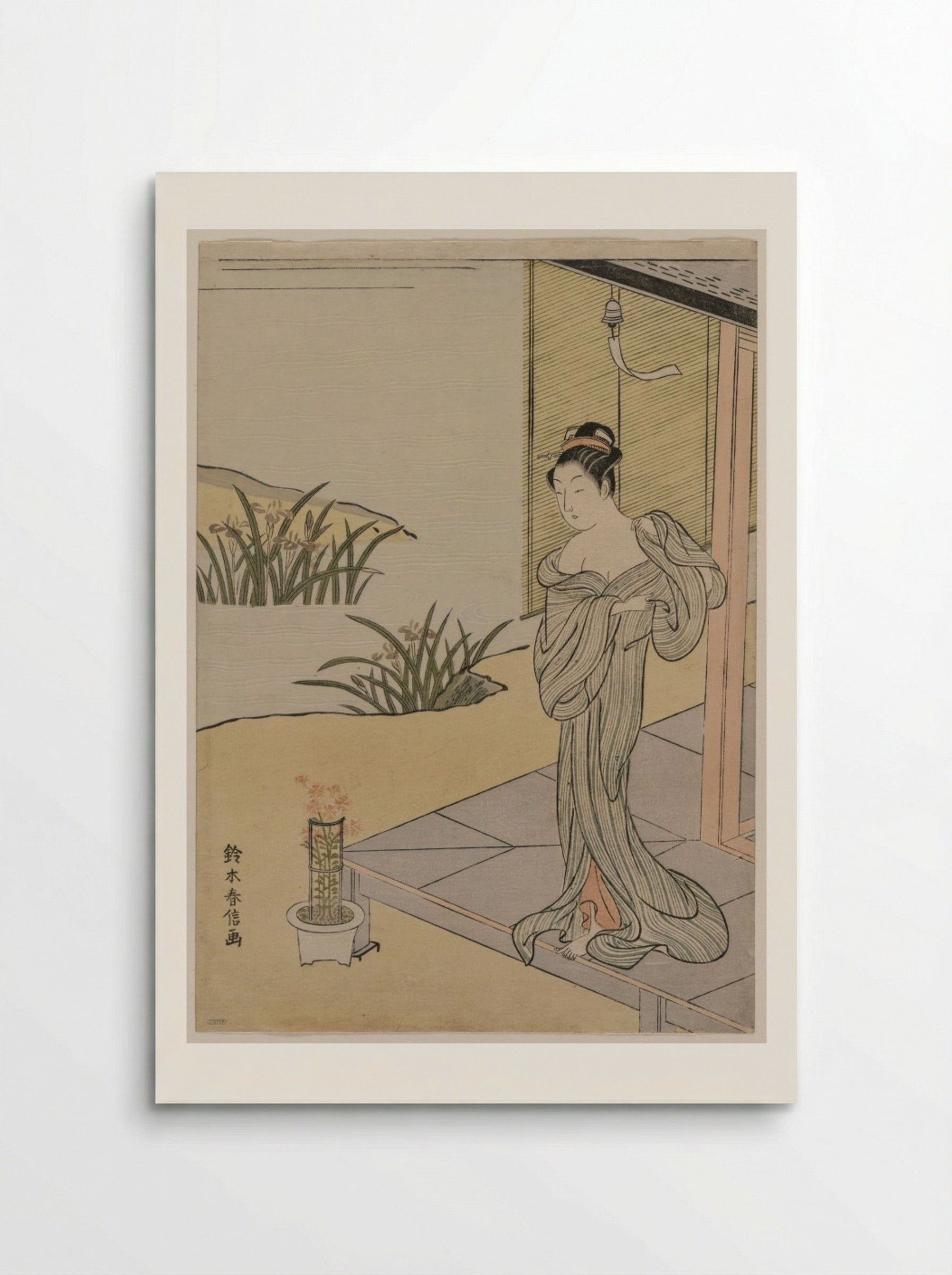 Young Woman Looking at a Pot of Pinks - Suzuki Harunobu
Print
Regular price From £28.00 GBPSale price From £28.00 GBP Regular price -
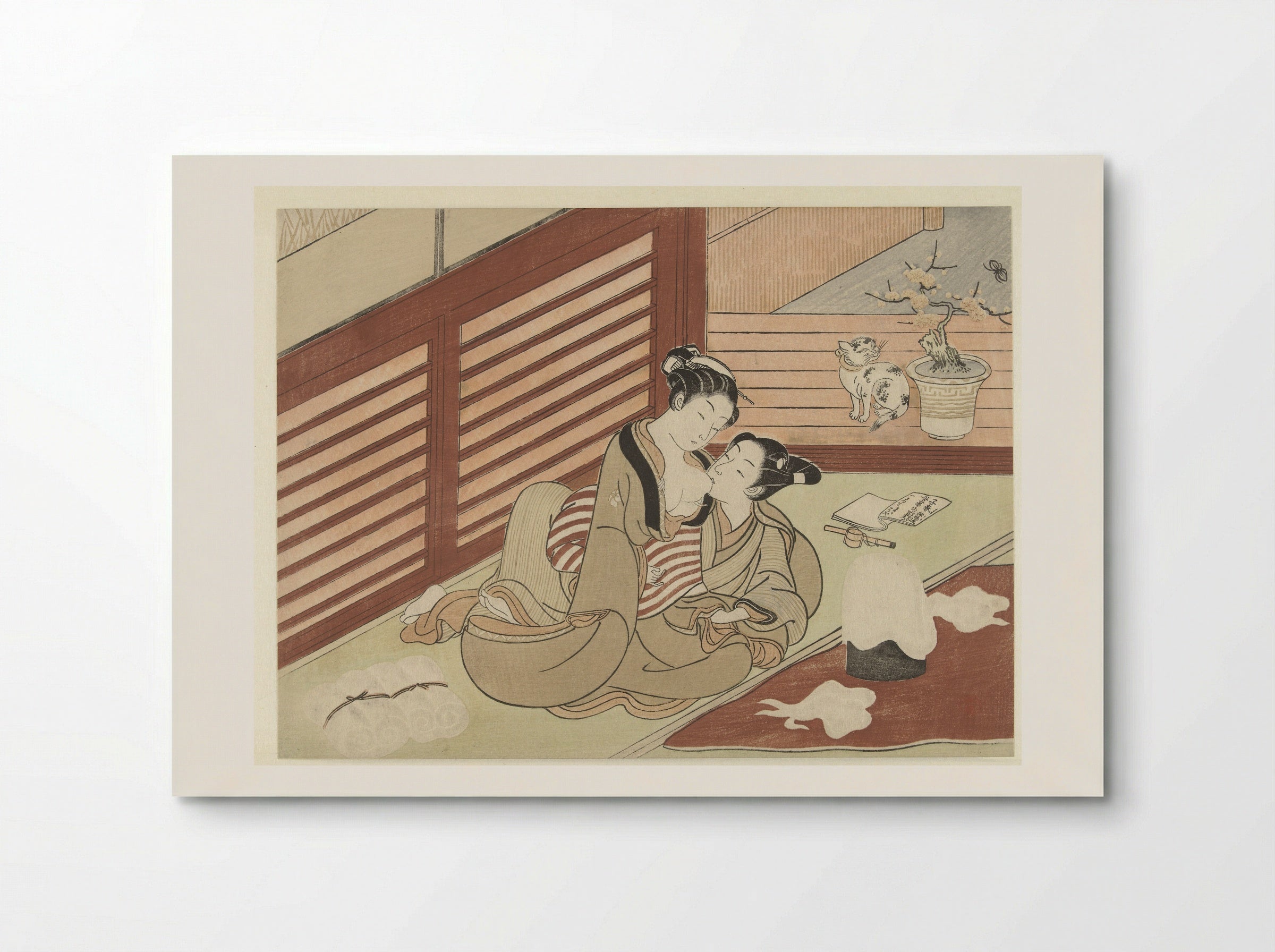 Liefdespaar - Suzuki Harunobu
Print
Regular price From £28.00 GBPSale price From £28.00 GBP Regular price


Artist Biography
Suzuki Harunobu
Suzuki Harunobu did not start his career with the full palette of colours for which he is now known. His early work consisted of simple two-colour prints and mizu-e, or water pictures, which used coloured key blocks instead of black to create a pale appearance. His transition occurred in 1765 when he collaborated with private poetry clubs to produce egoyomi, which were pictorial calendars. These commissions allowed him to use the expensive pigments and heavy paper that defined nishiki-e, or brocade pictures.
Harunobu moved away from the stiff portraits of kabuki actors common in his era. He preferred to depict young women in their daily lives, often using an elevated viewpoint to look into private spaces. His series Zashiki hakkei, or Eight Parlour Views, provides a clear example of his method. He took classical Chinese themes and reimagined them as domestic scenes. A temple bell might become a chiming clock. A distant storm is represented by a woman drying herself after a bath.
Modern collectors value these prints for their quiet atmosphere and precise compositions. Harunobu avoided the aggressive energy of later ukiyo-e artists. He chose instead to focus on slender figures and soft colour harmonies. His work captures specific moments of leisure, such as playing cat's cradle or walking by the shore. These scenes offer a calm window into eighteenth-century Japan. They remain popular because they balance historical detail with a clean, graphic sensibility that suits contemporary interiors.
Harunobu moved away from the stiff portraits of kabuki actors common in his era. He preferred to depict young women in their daily lives, often using an elevated viewpoint to look into private spaces. His series Zashiki hakkei, or Eight Parlour Views, provides a clear example of his method. He took classical Chinese themes and reimagined them as domestic scenes. A temple bell might become a chiming clock. A distant storm is represented by a woman drying herself after a bath.
Modern collectors value these prints for their quiet atmosphere and precise compositions. Harunobu avoided the aggressive energy of later ukiyo-e artists. He chose instead to focus on slender figures and soft colour harmonies. His work captures specific moments of leisure, such as playing cat's cradle or walking by the shore. These scenes offer a calm window into eighteenth-century Japan. They remain popular because they balance historical detail with a clean, graphic sensibility that suits contemporary interiors.


Why Choose Us ?