

Collection
Luca Giordano
Explore curated art prints selected for distinctive homes and considered interiors.
Suggested filters
-
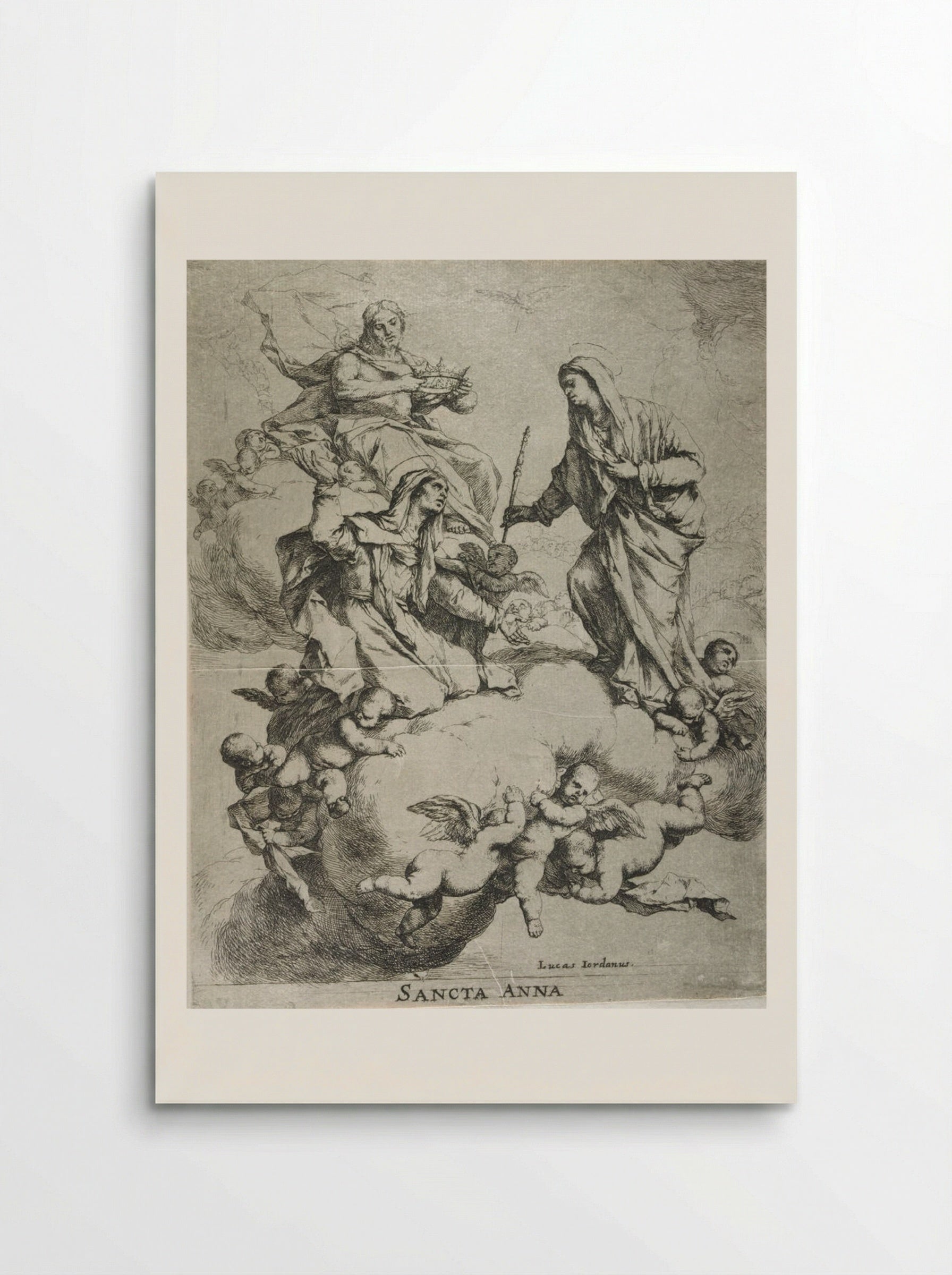 Christ, The Virgin, and Saint Anne - Luca Giordano
Print
Regular price From £28.00 GBPSale price From £28.00 GBP Regular price

Artist Biography
Luca Giordano
Giordano admitted he had a gold brush, a silver brush and a bronze brush. The quality of his paintings ranged from brilliant to mediocre depending on how much attention he gave them, and he gave attention unevenly because he painted faster than anyone in seventeenth-century Europe. His nickname was Luca fa presto: Luca paints quickly. He reportedly completed a large altarpiece in a single day.
He was born in Naples in 1634 and trained under Jusepe de Ribera. Around 1652 he travelled to Rome, where he absorbed Pietro da Cortona's Baroque dynamism and studied the High Renaissance masters. His other nickname, Proteus, came from his ability to produce convincing pastiches in the style of almost any painter: Durer, Titian, Veronese. The skill was admired rather than criticised; versatility was a virtue in Baroque Naples.
In 1692, Charles II of Spain invited him to Madrid, where he spent ten years painting frescoes in the Escorial, the Royal Palace and other buildings. His Spanish work is among his best: the scale suited his ambition, and the court demanded the gold brush. He returned to Naples in 1702 after the king's death.
His late paintings, lighter and less rhetorical than his Roman-influenced middle period, anticipated the Rococo. Fragonard admired them a generation later. Giordano was generous with money, particularly to poorer artists, and spent large sums on acts of patronage and charity. His output was enormous, running to thousands of works across oil and fresco. He died in Naples in 1705, at seventy.
He was born in Naples in 1634 and trained under Jusepe de Ribera. Around 1652 he travelled to Rome, where he absorbed Pietro da Cortona's Baroque dynamism and studied the High Renaissance masters. His other nickname, Proteus, came from his ability to produce convincing pastiches in the style of almost any painter: Durer, Titian, Veronese. The skill was admired rather than criticised; versatility was a virtue in Baroque Naples.
In 1692, Charles II of Spain invited him to Madrid, where he spent ten years painting frescoes in the Escorial, the Royal Palace and other buildings. His Spanish work is among his best: the scale suited his ambition, and the court demanded the gold brush. He returned to Naples in 1702 after the king's death.
His late paintings, lighter and less rhetorical than his Roman-influenced middle period, anticipated the Rococo. Fragonard admired them a generation later. Giordano was generous with money, particularly to poorer artists, and spent large sums on acts of patronage and charity. His output was enormous, running to thousands of works across oil and fresco. He died in Naples in 1705, at seventy.


Why Choose Us ?