

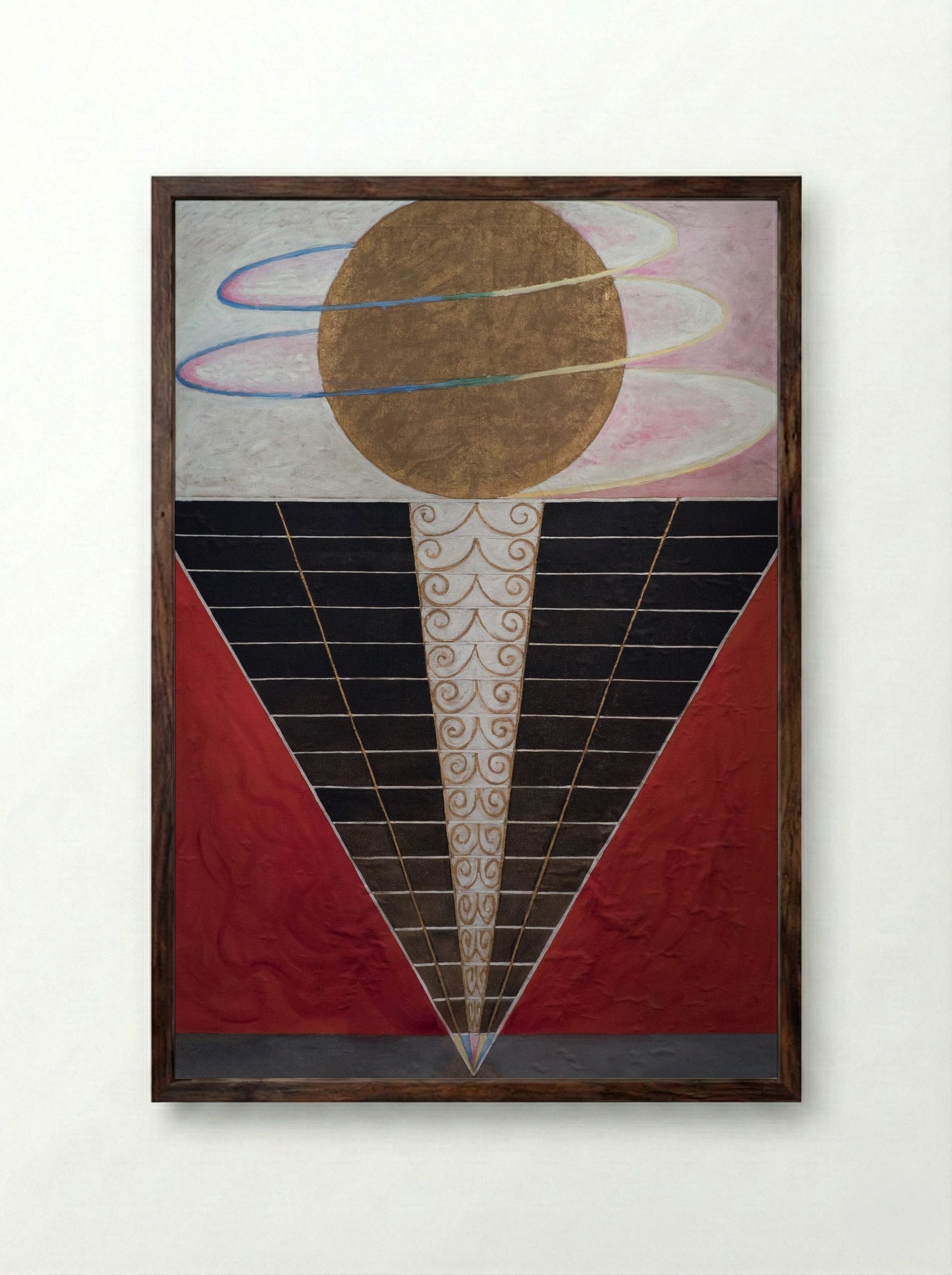
Altarbild Nr. 2 – Hilma af Klint
Archival Pigmentdruck
Rahmen werden montagefertig geliefert
Sichere Kaufabwicklung
Auf Bestellung gefertigt
Beschreibung
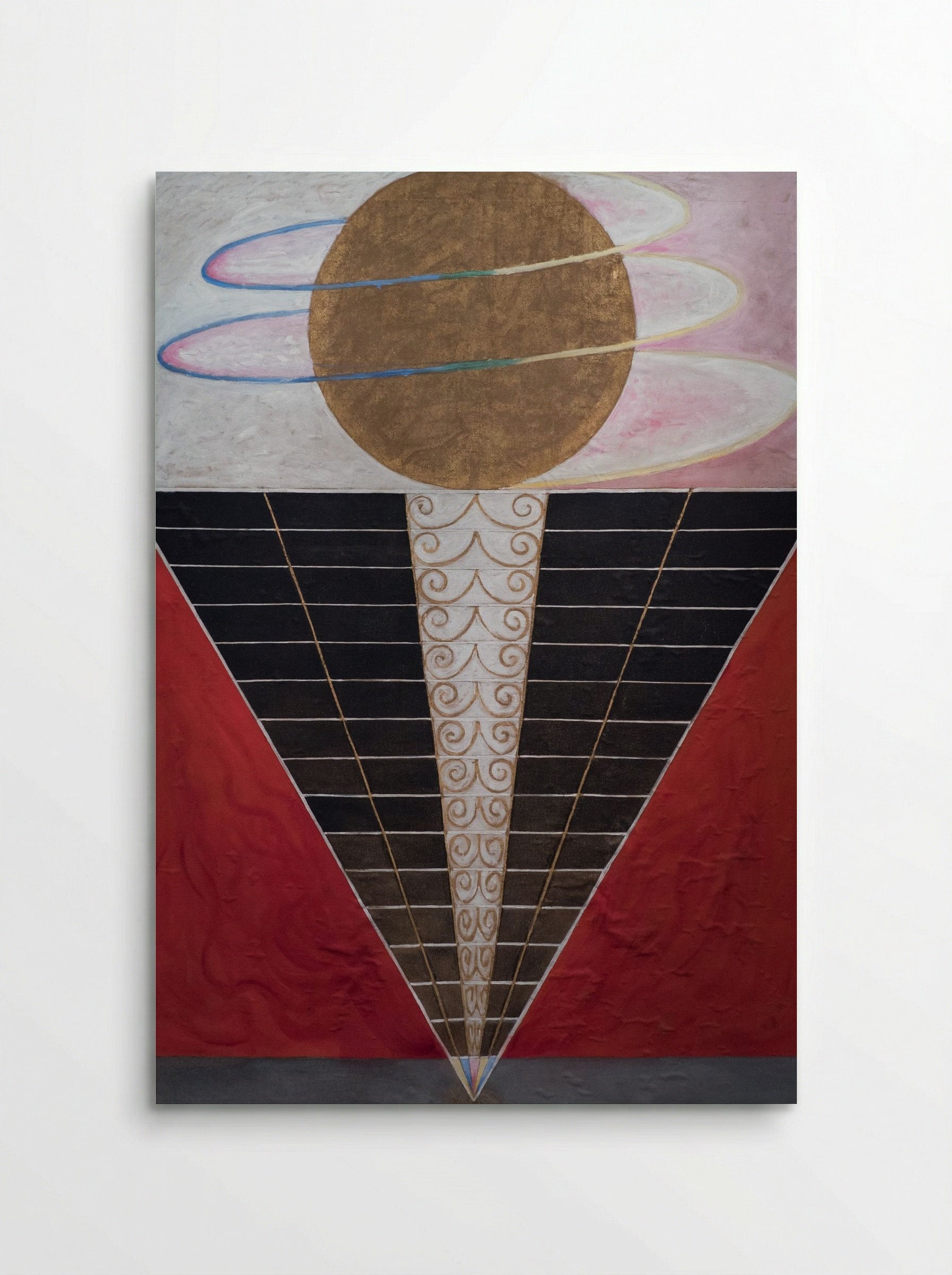
Dieses abstrakte Gemälde von Hilma af Klint zeigt geometrische Formen und symbolische Farben, die eine strukturierte Komposition bilden, die zur Kontemplation über die Beziehung zwischen dem Irdischen und dem Göttlichen einlädt.
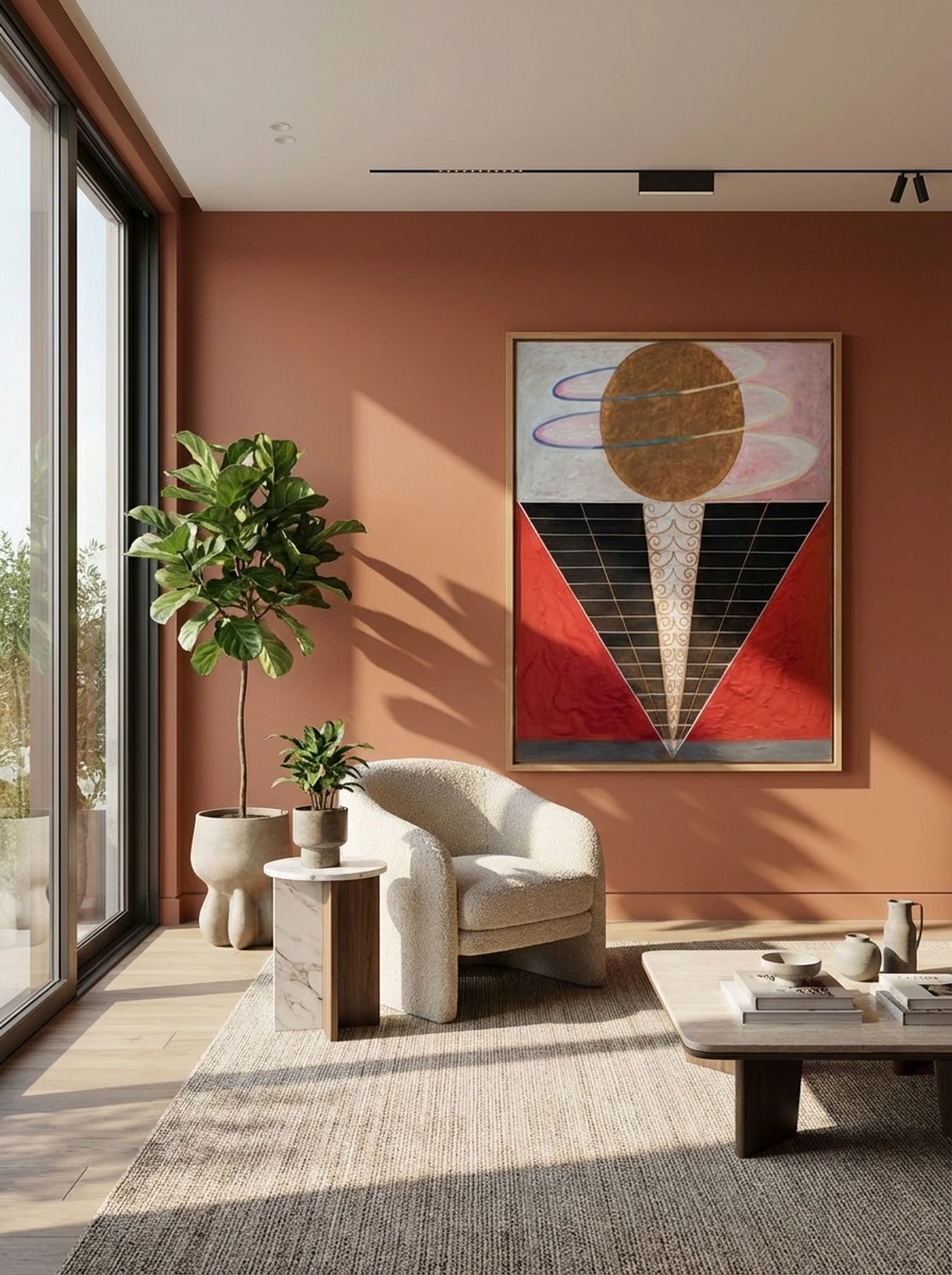
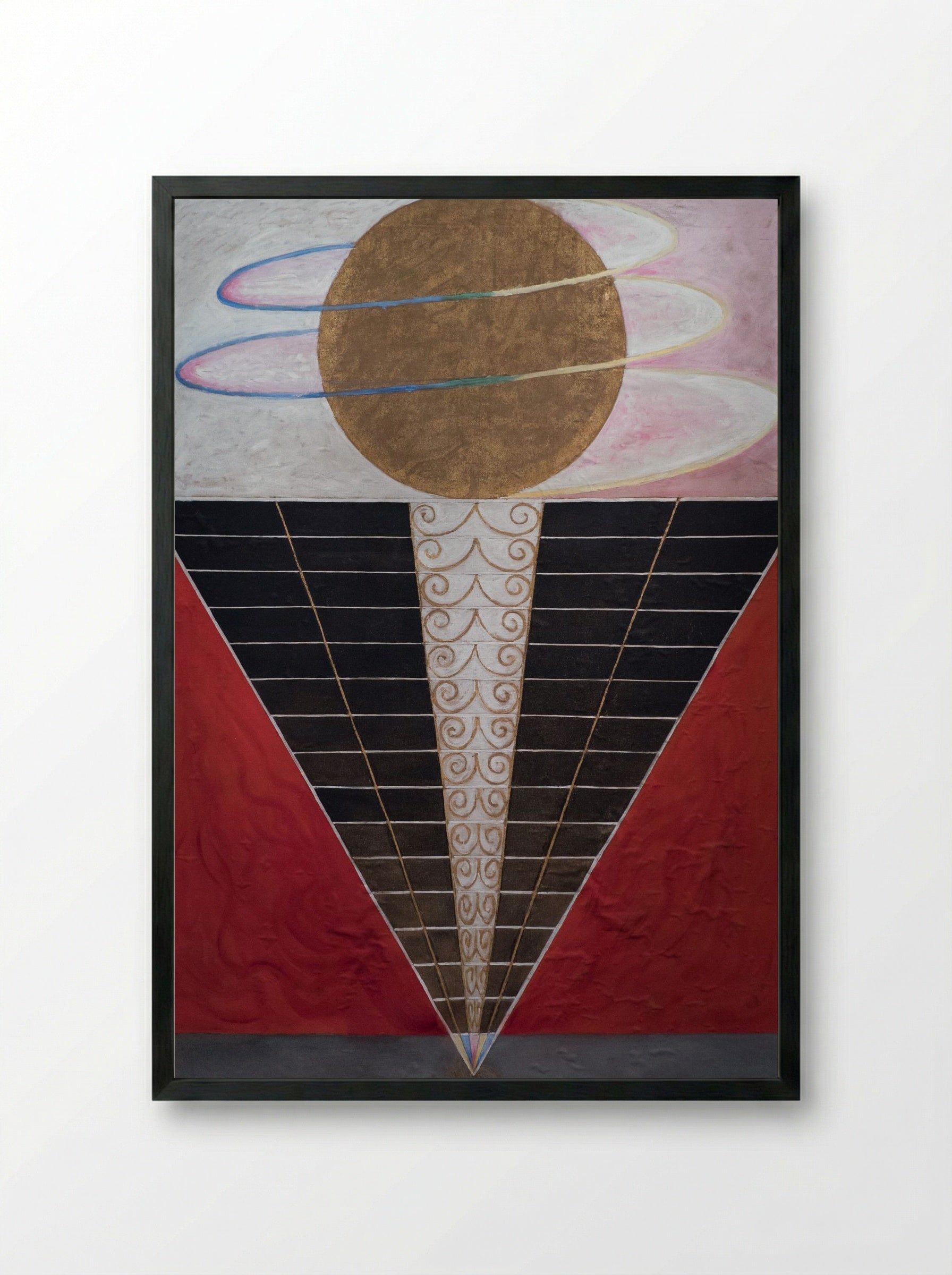
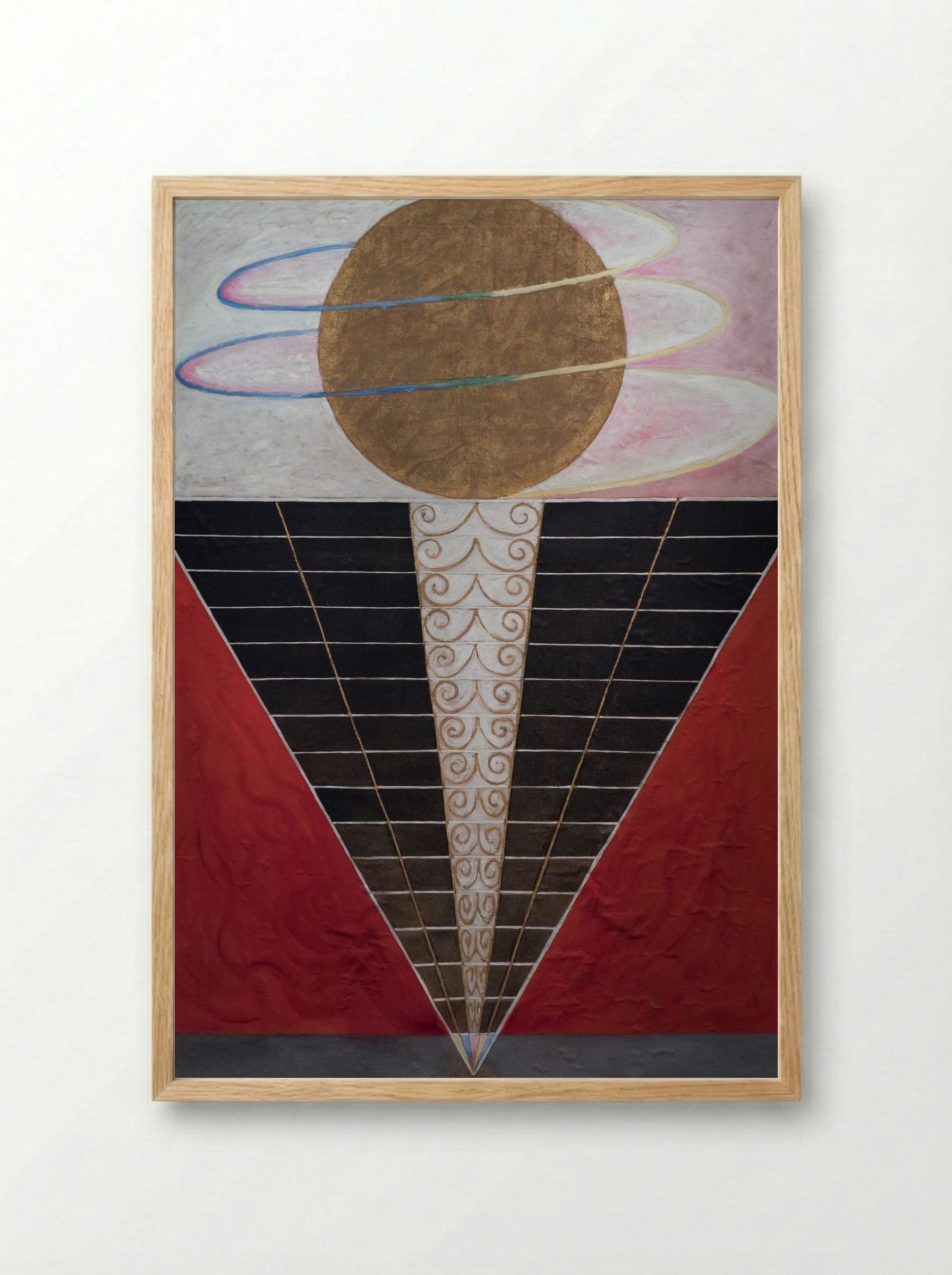
Hilma af Klint war eine schwedische Künstlerin und Mystikerin, deren Gemälde zu den ersten abstrakten Werken der westlichen Kunstgeschichte zählen. Sie schuf ein umfangreiches Werk, das den bekannteren abstrakten Gemälden von Künstlern wie Kandinsky und Mondrian vorausgeht. Klint glaubte, dass ihre Gemälde von spirituellen Führern in Auftrag gegeben wurden, und sie betrachtete ihre Arbeit als Medium zur Vermittlung komplexer spiritueller und philosophischer Ideen. „Altarbild Nr. 2“ zeigt eine Komposition, die von geometrischen Formen und symbolischen Farben dominiert wird. Eine große goldene Kugel, die möglicherweise die Sonne oder eine spirituelle Ebene darstellt, schwebt über einer strukturierten Anordnung von schwarzen und roten Dreiecken. Eine zentrale Säule aus stilisierten, sich wiederholenden Motiven steigt von der Kugel herab und bildet eine visuelle Achse. Die Farbpalette des Gemäldes ist zurückhaltend, wobei Gold, Schwarz, Rot und Weiß zu seiner symbolischen Bedeutung beitragen. Der Gesamteindruck ist der einer strukturierten Spiritualität, die zur Kontemplation über die Beziehung zwischen dem Irdischen und dem Göttlichen einlädt.
Das könnte Ihnen auch gefallen
Warum uns wählen?
Garantie für beschädigungsfreie Lieferung
Schneller Versand
Museumsreife Materialien

Biografie des Künstlers
Hilma af Klint
She was born in 1862 into a naval family in Stockholm. She showed early ability in both mathematics and botany, studied at the Royal Academy of Fine Arts, graduated with honours in 1887, and established herself as a conventional painter of landscapes and portraits. She also worked as a scientific illustrator, producing botanical drawings of fungi for a book that was never published. In 1919 and 1920 she drew flowers almost daily, creating jewel-toned watercolours with the precision of a naturalist who knew when each species bloomed.
The abstract work came from a different source. She attended her first seance at seventeen. In 1896 she formed a group called De Fem (The Five) with four other women: Anna Cassel, Cornelia Cederberg, Sigrid Hedman, and Mathilda Nilsson. They contacted what they believed to be spirit guides from another dimension and kept meticulous notes. In 1906, aged forty-four, she received instructions during a seance to create paintings for a Temple. She never understood where or what this Temple was, but she began.
The Paintings for the Temple series, 193 works made between 1906 and 1915, includes compositions that are completely abstract. She used a systematic colour symbolism: blue for femininity or spirituality, yellow for masculinity or intellect. Spirals, circles, and intersecting lines represented spiritual forces or natural processes. Where Kandinsky's abstraction looked inward to the artist's own psychology, af Klint believed astral spirits were working through her hands.
She died in 1944. The embargo lifted in 1964, but the work was not shown publicly until 1986. In 2018, the Guggenheim mounted Hilma af Klint: Paintings for the Future. It drew over 600,000 visitors, the most attended exhibition in the museum's history. She left behind more than 1,200 paintings and thousands of pages of notes.
Das könnte Ihnen auch gefallen
Altarbild Nr. 2 – Hilma af Klint
An empty frame is a sad thing.
We use cookies to measure our marketing and see which prints people love.We use cookies to measure our marketing.
By continuing to browse, you agree · Privacy Policy