


Georges-François Blondel
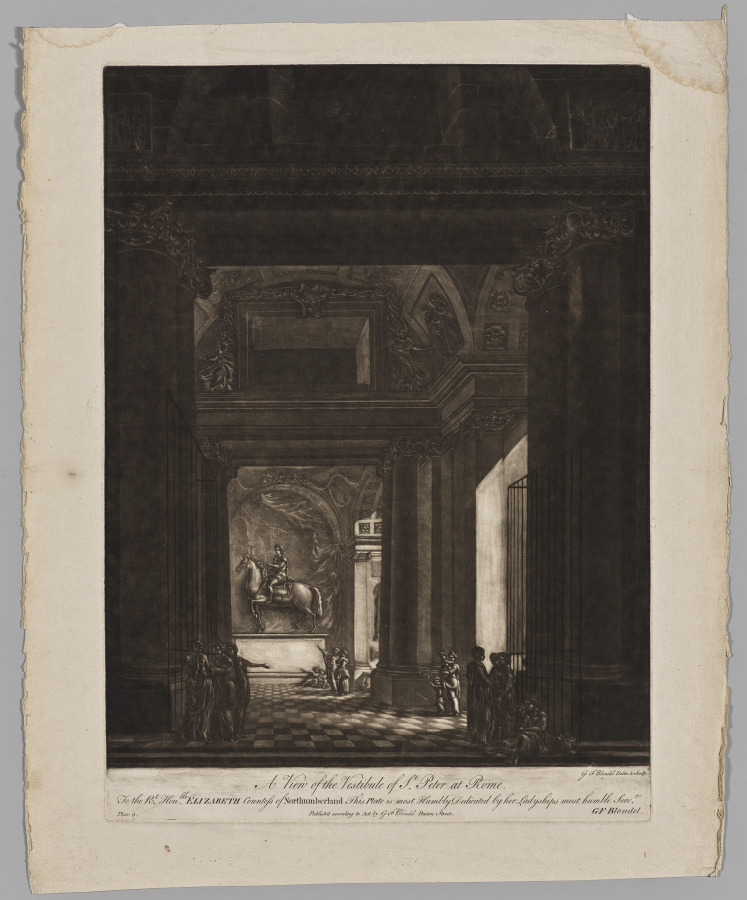
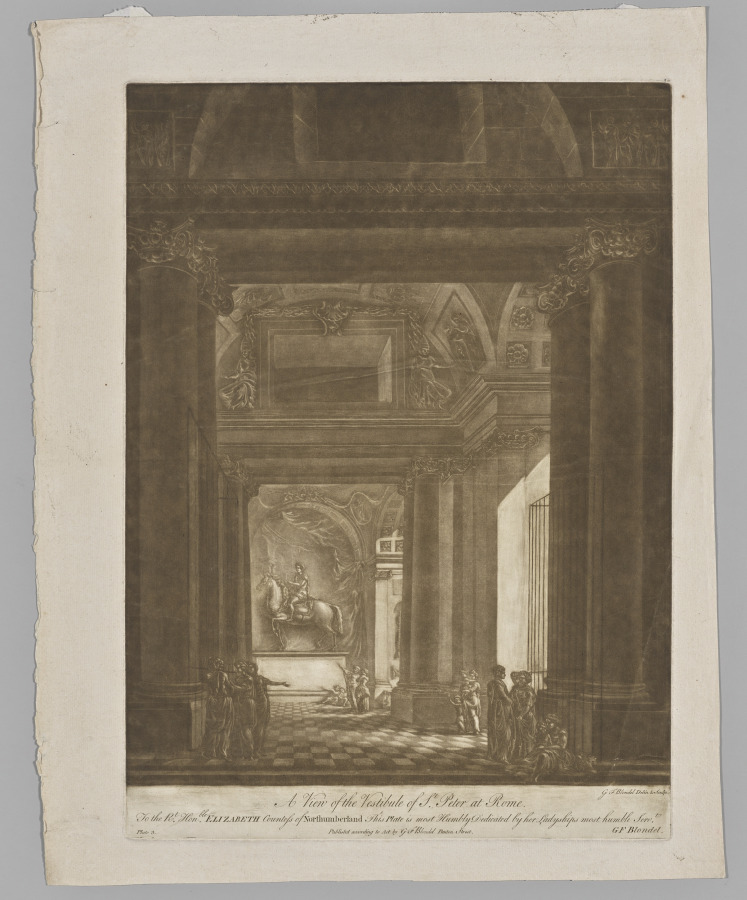
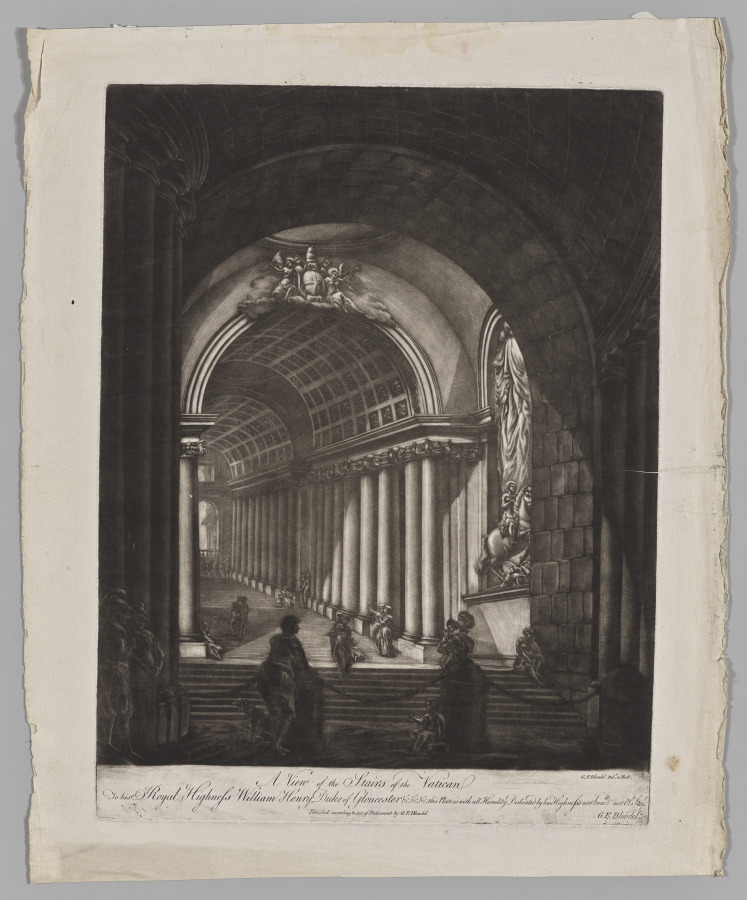
Georges-François Blondel was the son of a famous architect, yet he chose to capture buildings through the medium of printmaking rather than construction. He spent several years in Rome during the mid-eighteenth century, where he studied the ruins of antiquity. Unlike many of his contemporaries who produced small etchings, Blondel experimented with large-scale mezzotints. He later moved to London and marketed these substantial prints as a new way to decorate interior walls.
Biography
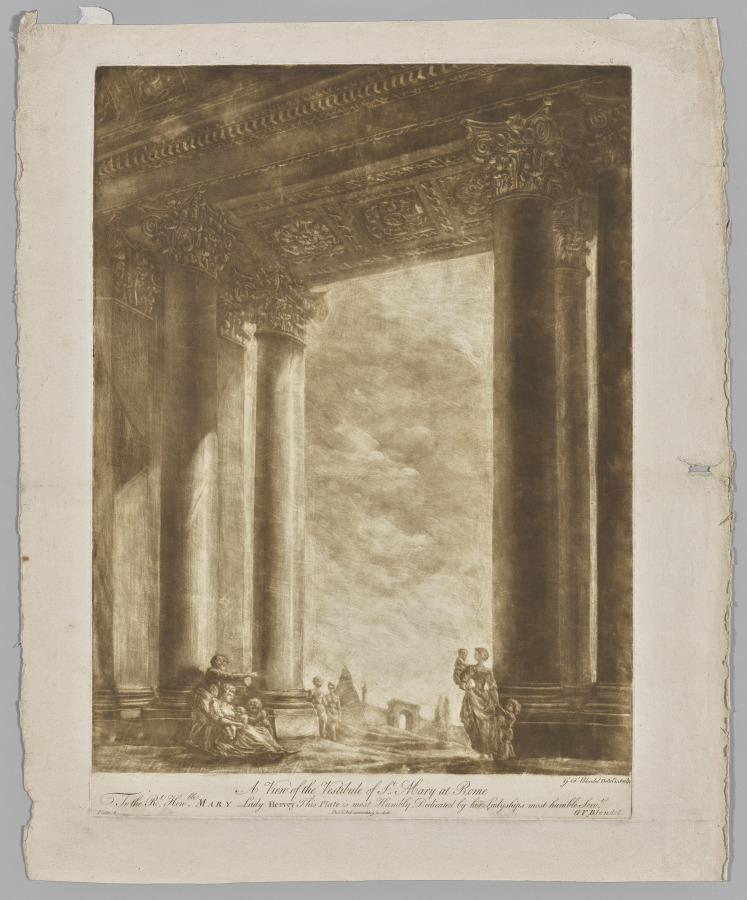
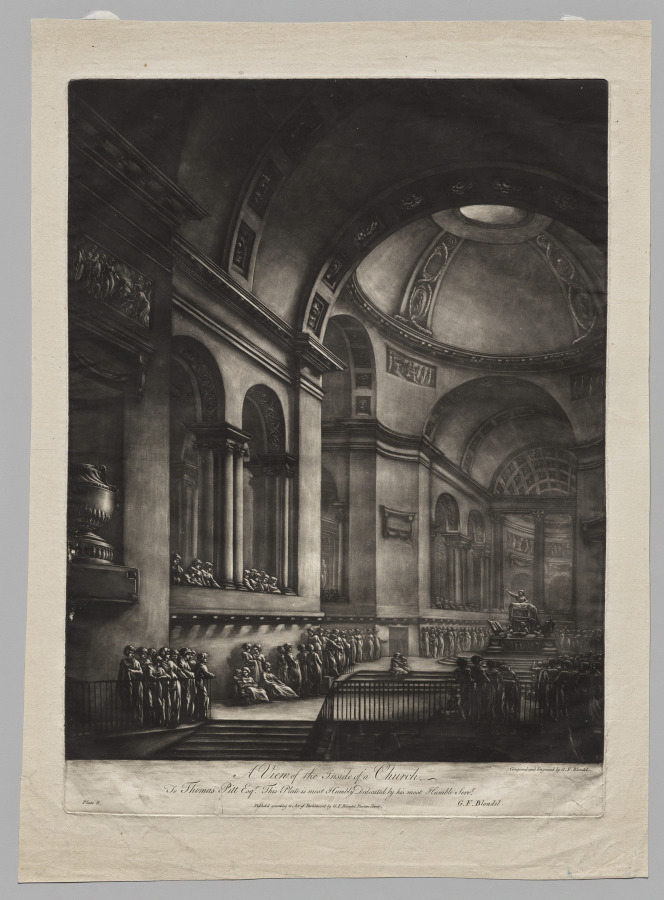
His work focuses on the scale and volume of Neoclassical structures. In pieces like 'A View of the Vestibule of Saint Mary at Rome', Blondel uses deep shadows and sharp contrasts to define stone surfaces. He avoids the cluttered detail found in traditional topographical views. Instead, he emphasises the geometry of vaults and columns. His training in architecture allowed him to maintain technical accuracy while creating a sense of immense space. He often placed small figures within these vast interiors to provide a sense of human proportion against the heavy masonry.
Modern collectors value Blondel for his clean lines and monochromatic palette. These prints suit contemporary interiors because they offer a sense of order and architectural depth. The lack of excessive ornamentation makes his work feel relevant to today's aesthetic. His focus on light and form ensures these pieces are windows into a quiet, structured world. They provide a sophisticated atmosphere for a study or a hallway without overwhelming the surrounding decor.
Notable Works
Tap to view larger.
Next stop
Browse the movements →
Every movement in the collection, from the Renaissance to Pop art.
Related Artists


Frequently Asked Questions
When was Georges-François Blondel born?
Georges-François Blondel was born in 1730 and died in 1791.What is Georges-François Blondel known for?
Georges-François Blondel is known for georges-François Blondel was an eighteenth-century French printmaker who created large-scale mezzotints of Roman ruins and Neoclassical interiors using dramatic lighting and architectural precision.