

Feer - Charles Rennie Mackintosh
Arkivbeständigt giclée-tryck
Ramar levereras klara att hängas upp
Säker utcheckning
Tillverkad på beställning
Beskrivning
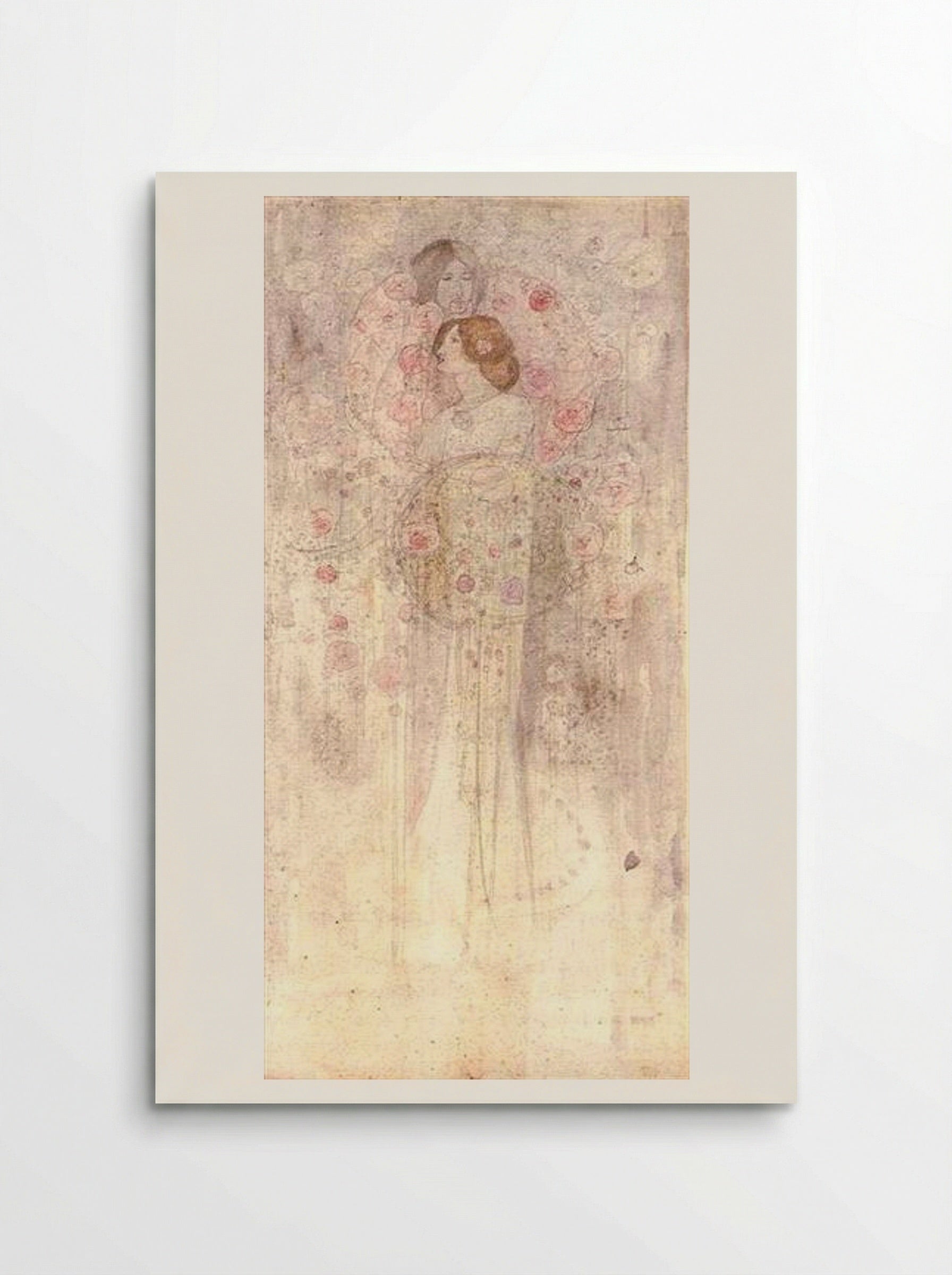
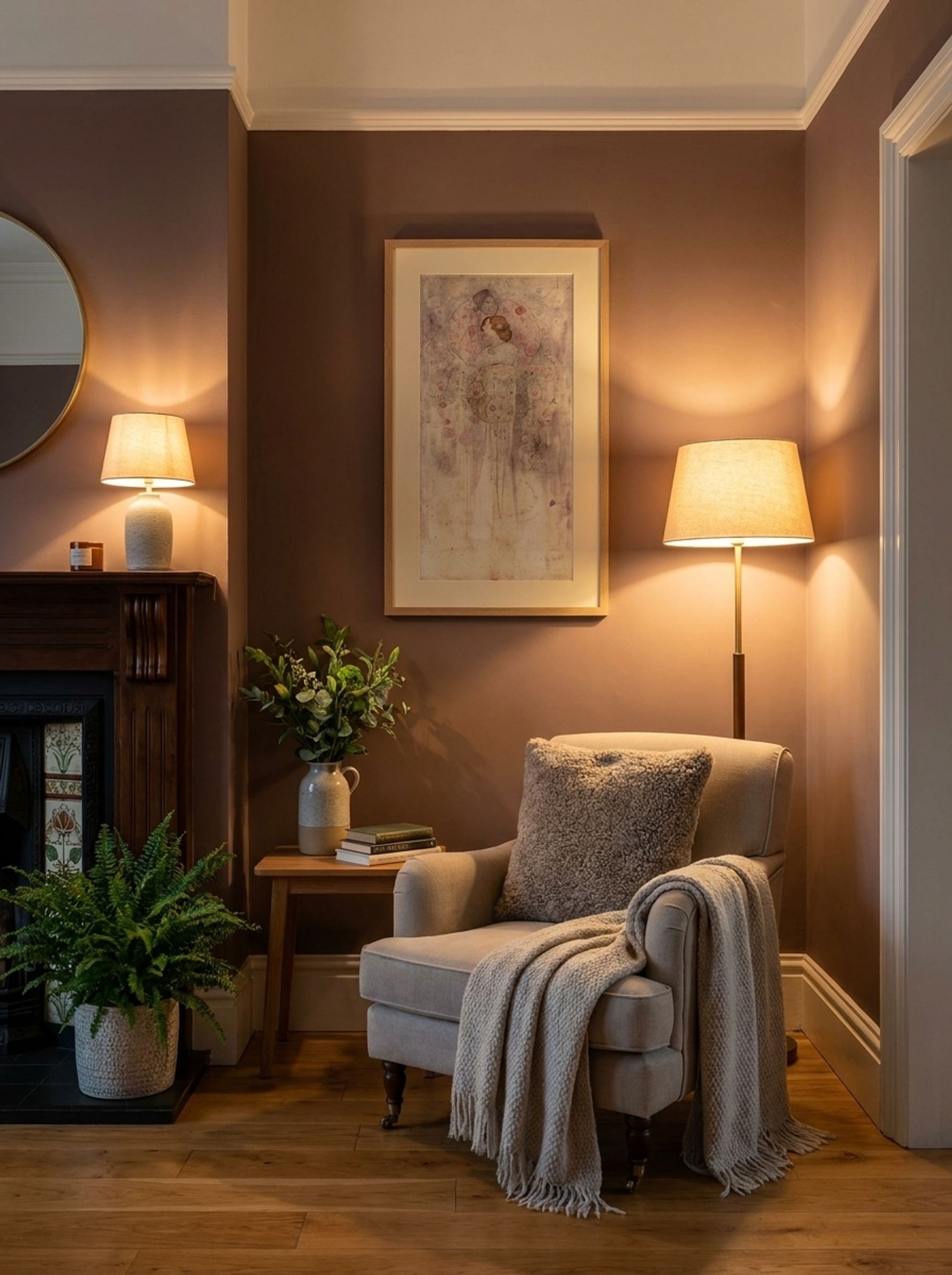
En akvarellmålning av Charles Rennie Mackintosh, "Fairies", visar två figurer omgivna av rosor i mjuka, dämpade toner, vilket speglar konstnärens Art Nouveau-stil och intresse för symbolisk bildspråk.
Denna akvarellmålning av Charles Rennie Mackintosh föreställer två figurer omgivna av rosor. Mackintosh, en skotsk arkitekt, designer och konstnär, associeras med Art Nouveau-rörelsen och, mer specifikt, med Glasgow Style. Hans verk kombinerar ofta blommiga motiv, geometriska former och symboliska bilder. Kompositionen visar två eteriska figurer, möjligen älvor, utförda i mjuka, dämpade toner. Figurerna är omgivna av stiliserade rosor, som är ett återkommande motiv i Mackintoshs design. Färgpaletten är delikat, dominerad av bleka rosa, krämfärgade och bruna toner, vilket skapar en drömlik atmosfär. De tunna, flödande linjerna och den övergripande kompositionen bidrar till verkets dekorativa kvalitet. Målningen speglar Mackintoshs intresse för det symboliska och det mystiska, samt hans distinkta förhållningssätt till design.
Returpolicy
Eftersom varje tryck görs på beställning erbjuder vi inte returer, återbetalningar eller byten på grund av ändrade åsikter. Om din beställning kommer fram felaktig, skadad eller fel, ersätter vi den kostnadsfritt – kontakta oss bara inom 48 timmar efter leverans. Se vår återbetalningssida för fullständig information.
Frakt
Vi skickar till hela världen och trycker vid den produktionsanläggning som är närmast din leveransadress. Leveranstider och kostnader varierar beroende på destination – du ser tillgängliga alternativ i kassan.
Tillverkning
Varje tryck produceras på beställning med 12-färgs gicléetryck på FSC-certifierat arkivpapper. Designade i Storbritannien och tryckta vid närmaste produktionsanläggning för att minska avfall och snabba upp leveransen.
Feer - Charles Rennie Mackintosh

Artist Biography
Charles Rennie Mackintosh
He was the fourth of eleven children, seven of whom survived infancy. His father was a police superintendent. The boy was probably dyslexic, struggled badly at school, and used sketchbooks to manage what appear to have been emotional difficulties. He had a contracted sinew in one foot that gave him a limp, and childhood rheumatic fever left one side of his face permanently drooped. None of this stopped him drawing.
He enrolled at Glasgow School of Art at fifteen, studying part-time while apprenticed to the architect John Hutchinson. In 1889 he joined Honeyman and Keppie, where he would remain for nearly two decades. He met Margaret Macdonald in 1892. Together with her sister Frances and Herbert McNair, they formed a group that became known as The Four. Mackintosh and Margaret married in 1900. He acknowledged publicly that Margaret had genius where he had only talent.
His greatest commission was the Glasgow School of Art building itself, won in competition in 1897. The library wing, completed in 1909, is considered one of the finest interiors of the twentieth century. He designed all four tea rooms for the entrepreneur Catherine Cranston, going so far as to specify the waitresses' dresses and order the flowers. In Vienna, at the eighth Secessionist Exhibition in 1900, his work was received with an enthusiasm Glasgow never matched.
His style fell from favour. He drank. He was asked to leave his firm. In 1914 he and Margaret moved to Walberswick in Suffolk, where he was briefly arrested as a suspected German spy because of his Vienna correspondence and unusual manner. He was released without charge but effectively driven from the village.
In 1923, they moved to Port Vendres in the south of France. The light and landscape revived him. He painted watercolours of the surrounding hills and harbour with an obsessive attention to geological detail, completing around forty before returning to London for the last time.
Våra funktioner
Utformad för varaktig inverkan
Specifika funktioner
Varje Solis-konstverk tillverkas på beställning med arkivbeständiga material av gallerikvalitet som är byggda för att hålla.
- Giclée-tryck i museikvalitet för fylliga, blekningsbeständiga färger
- Arkivbeständigt matt konstpapper, FSC-certifierat
- Flera storlekar och inramningsalternativ tillgängliga
- Ramar i svart, naturträ, mörkt trä eller vitt
- Inramade tryck levereras klara att hänga upp
Skötsel & rengöring
För att bevara ditt konstverk i bästa skick:
- Damma försiktigt med en mjuk, torr trasa
- Undvik långvarigt direkt solljus
- Använd aldrig flytande rengöringsmedel på trycket eller dukytan
- Förvara på en torr plats i rumstemperatur
- Hantera tryck med rena, torra händer
Material och storlek
Gicléeutskrift av museikvalitet på FSC-certifierat matt arkivpapper, med inramade alternativ och alternativ på canvas.
- Pappersstorlekar: A4, A3, A2, A1, A0 och B2 (50×70 cm)
- Canvas: XS (20×30 cm) till Large (60×90 cm)
- Ramar: svart, naturligt trä, mörkt trä eller vit
Varför välja oss?
Leveransgaranti utan skador
Snabb leverans
Material av museikvalitet
Artistbiografi
Charles Rennie Mackintosh
He was the fourth of eleven children, seven of whom survived infancy. His father was a police superintendent. The boy was probably dyslexic, struggled badly at school, and used sketchbooks to manage what appear to have been emotional difficulties. He had a contracted sinew in one foot that gave him a limp, and childhood rheumatic fever left one side of his face permanently drooped. None of this stopped him drawing.
He enrolled at Glasgow School of Art at fifteen, studying part-time while apprenticed to the architect John Hutchinson. In 1889 he joined Honeyman and Keppie, where he would remain for nearly two decades. He met Margaret Macdonald in 1892. Together with her sister Frances and Herbert McNair, they formed a group that became known as The Four. Mackintosh and Margaret married in 1900. He acknowledged publicly that Margaret had genius where he had only talent.
His greatest commission was the Glasgow School of Art building itself, won in competition in 1897. The library wing, completed in 1909, is considered one of the finest interiors of the twentieth century. He designed all four tea rooms for the entrepreneur Catherine Cranston, going so far as to specify the waitresses' dresses and order the flowers. In Vienna, at the eighth Secessionist Exhibition in 1900, his work was received with an enthusiasm Glasgow never matched.
His style fell from favour. He drank. He was asked to leave his firm. In 1914 he and Margaret moved to Walberswick in Suffolk, where he was briefly arrested as a suspected German spy because of his Vienna correspondence and unusual manner. He was released without charge but effectively driven from the village.
In 1923, they moved to Port Vendres in the south of France. The light and landscape revived him. He painted watercolours of the surrounding hills and harbour with an obsessive attention to geological detail, completing around forty before returning to London for the last time.
Du kanske också gillar