


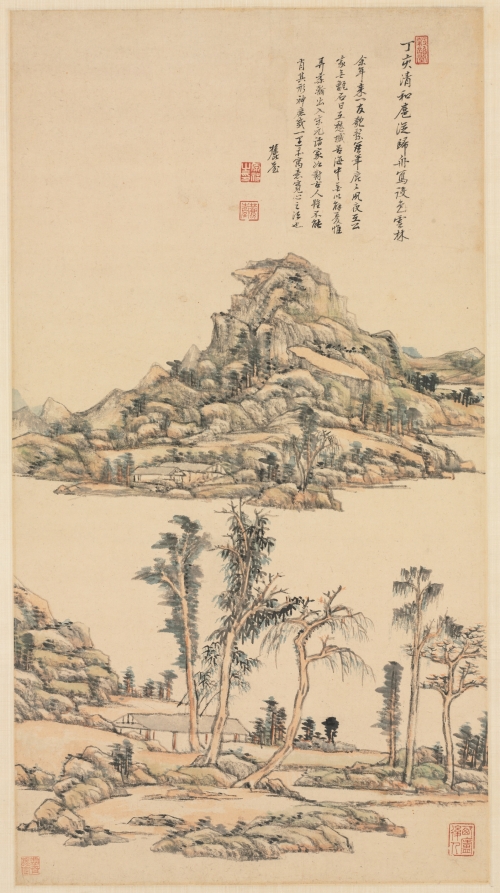


Wang Yuanqi
Wang Yuanqi balanserade en hög hovtjänst med rollen som ledande målare inom den ortodoxa skolan. Han var storsekreterare åt Kangxi-kejsaren. Samtidigt som han förvaltade den kejserliga konstsamlingen utvecklade han en metod av noggranna färglager. Han arbetade ofta med flera verk parallellt och lade på torrt bläck stegvis under många dagar. Arbetssättet liknade arkitektoniskt byggande mer än spontan skissning.

Biografi
Verken fokuserar på bergens strukturella logik, vars mönster han kallade ”drakådror”. I Landscape after Ni Zan och Green Peaks under Clear Sky undvek han dekorativa effekter och föredrog Yuandynastins strama stil. Torr pensel skapar fysisk massa. Kompositionerna framstår ofta som fragmenterade eller modulära och ger papperet rytmisk rörelse.
Moderna samlare uppskattar kompositionernas intellektuella stringens. Målningarna bygger varken på starka färger eller realistiska detaljer utan undersöker form och balans. Streams and Mountains without End skapar ordning och passar i stillsamma rum. Den återhållsamma tuschpaletten med lätta laveringar fungerar i moderna hem.
Viktiga verk
Tryck för att förstora.
Nästa anhalt
Utforska konstriktningarna →
Alla konstriktningar i samlingen, från renässansen till popkonsten.
Konsttryck av Wang Yuanqi
Handfärdigställda arkivtryck ur Wang Yuanqis konstnärskap.


Liknande konstnärer


Ta hem Wang Yuanqi.
Se alla konsttryck av Wang Yuanqi →Vanliga frågor
När föddes Wang Yuanqi?
Wang Yuanqi föddes 1642 och dog 1715.Vad är Wang Yuanqi känd för?
Wang Yuanqi var mästare under Qingdynastin och använde strukturella tuschtekniker för att skapa disciplinerade, rytmiska bergsscener inspirerade av äldre mästare.