

Giovanni Andrea Podestà
Giovanni Andrea Podestà moved from Genoa to Rome to join the Accademia di San Luca during the mid-seventeenth century. He became a specialist in the art of etching, specifically focusing on the works of Titian. While many printmakers of his era sought to reproduce contemporary paintings, Podestà looked back to the Venetian school for his subjects. He often dedicated his prints to influential patrons like Paolo Giordano Orsini, which helped establish his reputation among the Roman elite.
Biography
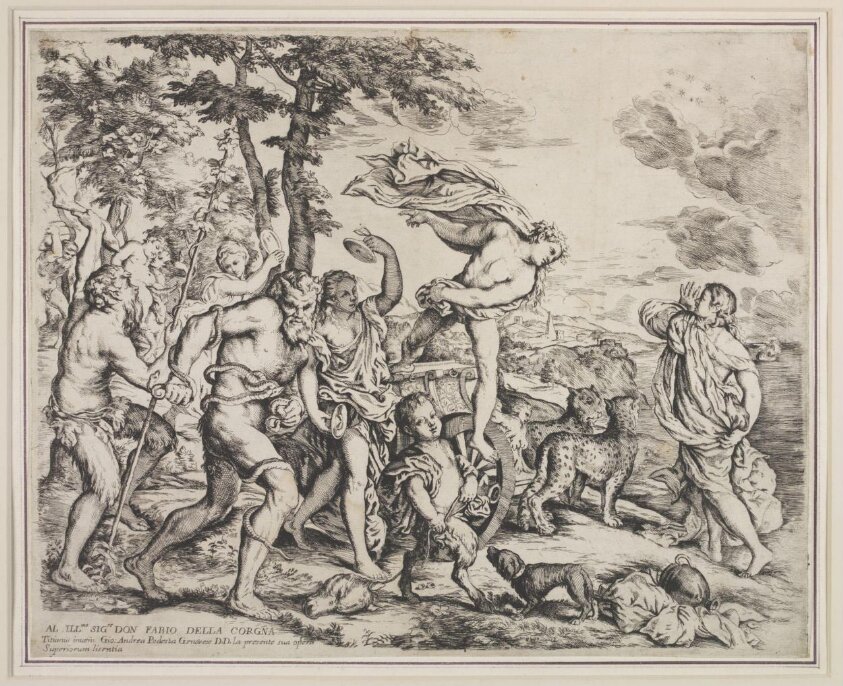
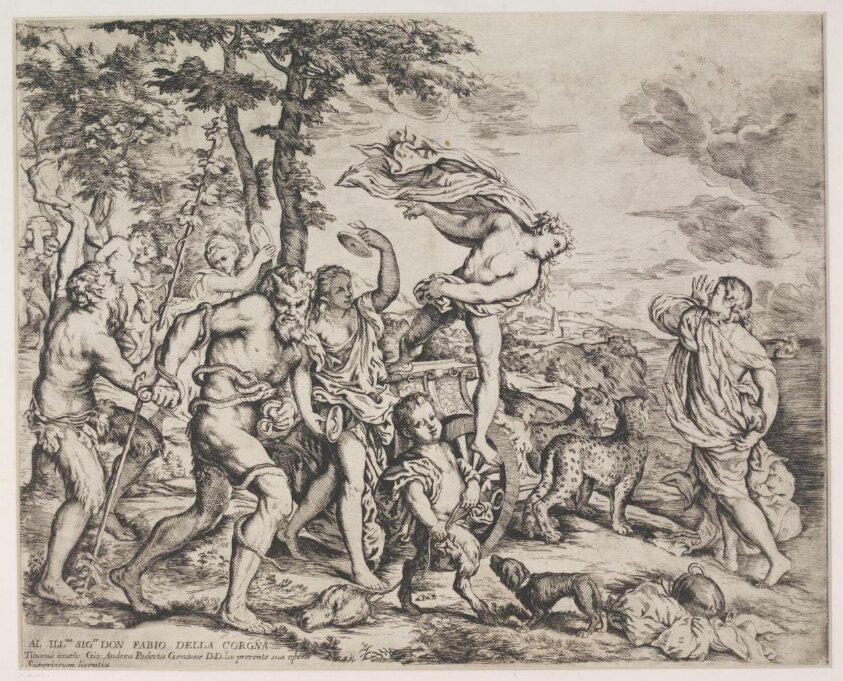
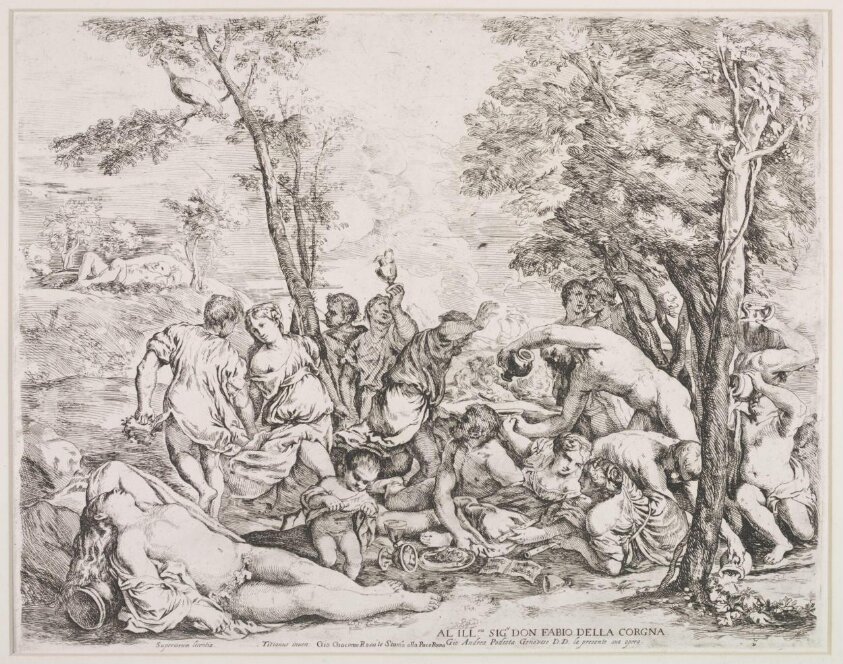
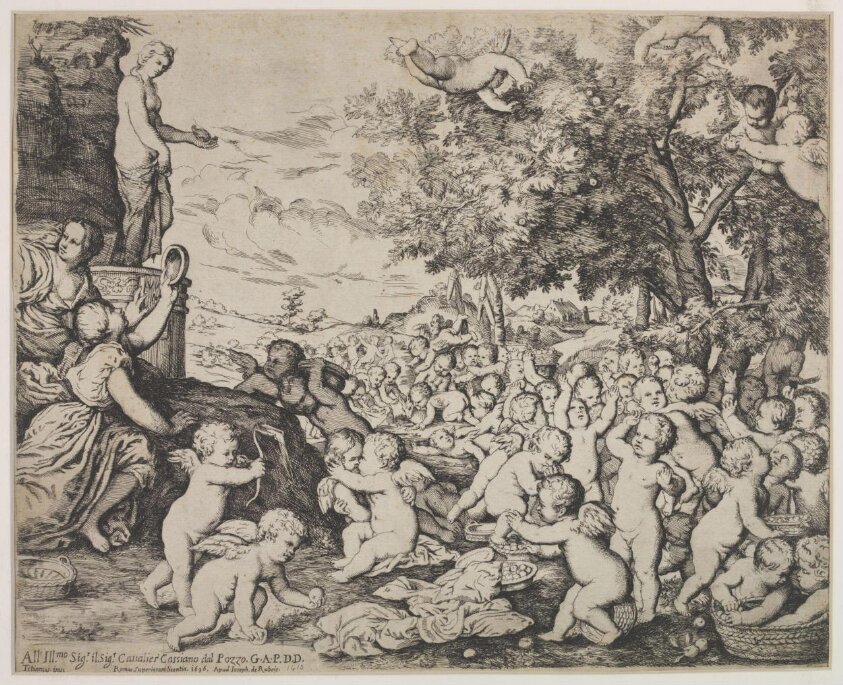
His artistic method involved a careful study of classical mythology and the human form. He is most recognised for his depictions of putti and bacchic revels. These scenes are populated by groups of small, energetic figures that fill the frame. He avoided heavy shadows, preferring a light touch that allowed the details of the anatomy to remain visible. His work bridges the gap between the technical precision of Northern European printmaking and the fluid grace of Italian design.
These prints appeal to modern collectors who appreciate the clarity of seventeenth-century line work. The subjects are often light-hearted, featuring putti and mythological deities in balanced arrangements. Because he worked primarily in monochrome etching, these prints suit a variety of interior styles. They offer a sense of historical continuity without the visual weight of large oil paintings.
Notable Works
Tap to view larger.
Next stop
Browse the movements →
Every movement in the collection, from the Renaissance to Pop art.
Related Artists

.jpg)
Frequently Asked Questions
When was Giovanni Andrea Podestà born?
Giovanni Andrea Podestà was born in 1608 and died in 1673.What is Giovanni Andrea Podestà known for?
Giovanni Andrea Podestà is known for giovanni Andrea Podestà was a seventeenth-century Genoese etcher known for his classical prints of putti and mythological scenes inspired by the Venetian school.