

Samling
Paul Gavarni
Utforska utvalda konsttryck för unika hem och medvetna inredningar.
Föreslagna filter
-
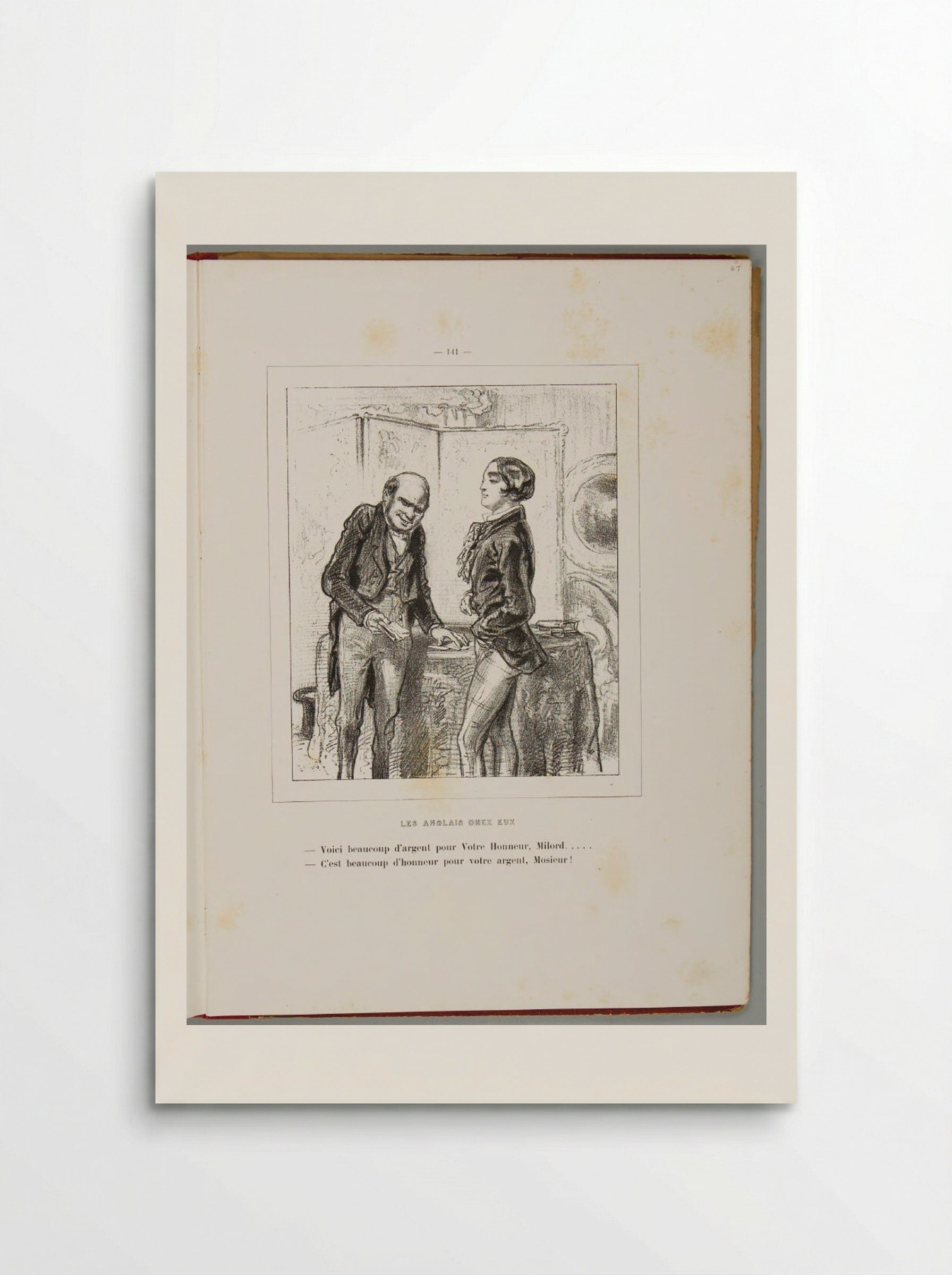 Här är en massa pengar för Ers Nåd, Min Herre. Här är en massa ära för era pengar, Herre. - Paul Gavarni
Print
Ordinarie pris Från £28.00 GBPReapris Från £28.00 GBP Ordinarie pris -
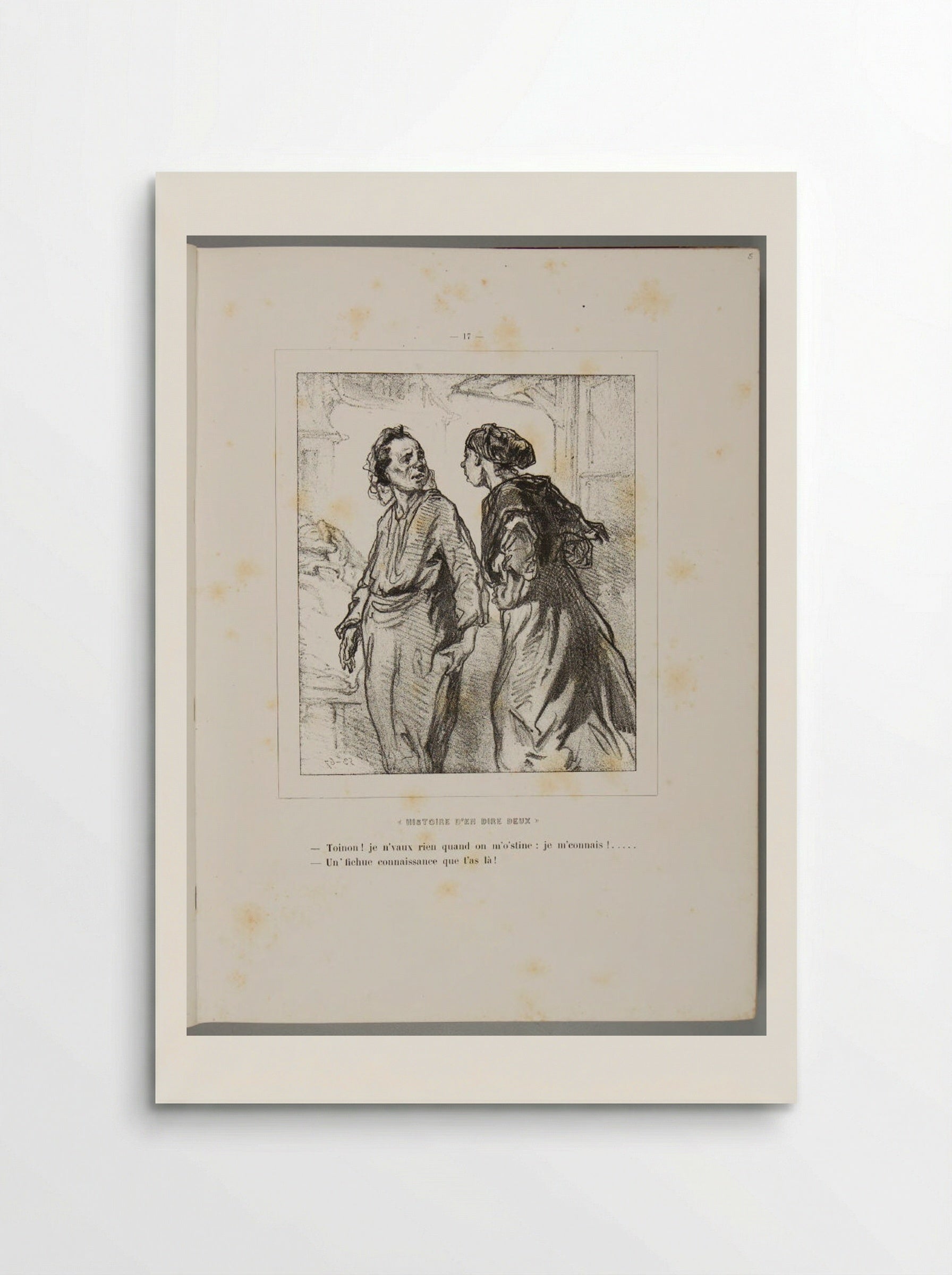 Toinon! Jag är intet värd då man antastar mig: jag vet mitt vett! Vilken fördömd kunskap ni har där!, sid. 17 - Paul Gavarni
Print
Ordinarie pris Från £28.00 GBPReapris Från £28.00 GBP Ordinarie pris

Artist Biography
Paul Gavarni
Gavarni was imprisoned for debt in 1835 after his magazine, the Journal of High Society, failed after eighteen issues. He served nearly a year. The experience did not prevent him from becoming the most stylish caricaturist in Paris, but it may explain the darkness that crept into his later work.
His real name was Sulpice Guillaume Chevalier. He adopted "Gavarni" from the town of Gavarnie in the Pyrenees after a journey there. He was born in Paris in 1804, worked as a machinist in a factory, and taught himself to draw in evening classes. By the 1830s he was the leading illustrator of Parisian social life: fashionable women, carnival scenes, lorettes and debardeurs, all rendered with a wit and polish that Balzac praised publicly and that helped establish Gavarni's reputation.
After the deaths of his mother and the collapse of his marriage around 1845, his style shifted. He spent time in London documenting the lives of the poor, producing work that was bleaker and more compassionate than his Paris satire. His catalogue raisonne lists approximately eight thousand works. He is often compared with his contemporary Daumier, though Gavarni's satire was more polished and less political. He died in Paris in 1866.
His real name was Sulpice Guillaume Chevalier. He adopted "Gavarni" from the town of Gavarnie in the Pyrenees after a journey there. He was born in Paris in 1804, worked as a machinist in a factory, and taught himself to draw in evening classes. By the 1830s he was the leading illustrator of Parisian social life: fashionable women, carnival scenes, lorettes and debardeurs, all rendered with a wit and polish that Balzac praised publicly and that helped establish Gavarni's reputation.
After the deaths of his mother and the collapse of his marriage around 1845, his style shifted. He spent time in London documenting the lives of the poor, producing work that was bleaker and more compassionate than his Paris satire. His catalogue raisonne lists approximately eight thousand works. He is often compared with his contemporary Daumier, though Gavarni's satire was more polished and less political. He died in Paris in 1866.


Varför välja oss?