



Antonio Sicurezza
Antonio Sicurezza painted the people of Basilicata with a realist commitment that lasted through every stylistic shift of the twentieth century. While Italian[1] art moved through Futurism, abstraction, and Arte Povera, Sicurezza maintained a figurative practice rooted in the landscape and life of southern Italy.
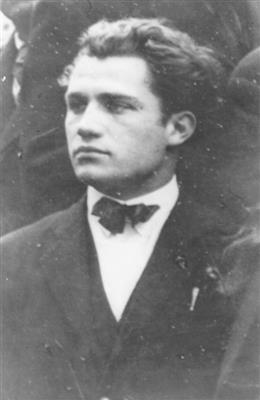
Biography
Born in Senise, Basilicata, in 1905[1], Sicurezza studied at the Accademia di Belle Arti in Naples. He developed a figurative style built on the social realism of the Italian[1] South, painting portraits, landscapes, and genre scenes drawn from the communities he knew.
His portraits capture the faces of rural southern Italy with an ethnographic directness. The landscapes of the Pollino massif and the Sinni valley are rendered in warm earth tones by a painter intimately familiar with the terrain.
A museum dedicated to his work, the Museo Antonio Sicurezza, was established in Senise. He died in 1979[1].
Timeline
- 1905Born in Senise, Basilicata, Italy
- 1905Studied at the Accademia di Belle Arti in Naples
- 1905Developed a figurative style based on social realism
- 1905Painted portraits, landscapes, and genre scenes
- 1905Portraits captured faces of rural southern Italy
- 1905Landscapes of Pollino massif and Sinni valley rendered
- 1905Museum dedicated to his work established in Senise
- 1979Died in 1979
Notable Works
Tap to view larger.
Next stop
Browse the movements →
Every movement in the collection, from the Renaissance to Pop art.
Related Artists

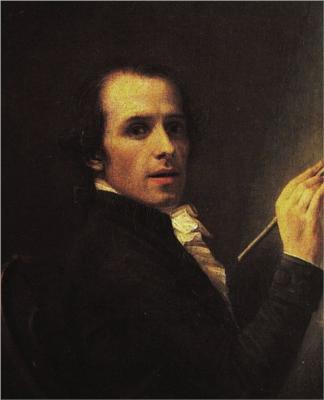

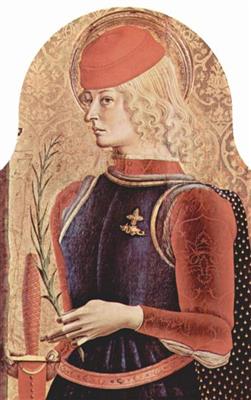
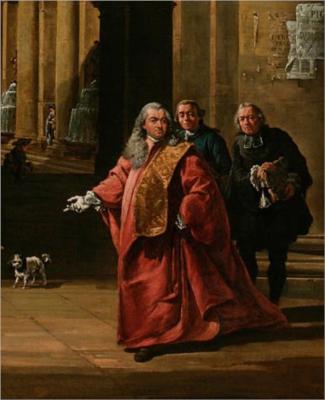
.jpg!Portrait.jpg)
Frequently Asked Questions
What is Antonio Sicurezza known for?
Antonio Sicurezza is known for his figurative paintings that capture the social realism of southern Italy. He painted portraits, landscapes, and genre scenes drawn from the communities he knew.What should I know about Antonio Sicurezza's prints?
When considering a print by Antonio Sicurezza, bear in mind some key terminology. A 'vintage print' was made around the time the negative was taken. A 'period print' was made within roughly 10 to 15 years after. Anything printed later is termed an 'old print', 'modern print', or 'contemporary print' depending on its age. An 'original print' is one made by the artist or under their supervision. A 'facsimile' is a reproduction using the original negative; its print base and processing should match the reference print, often a vintage print. These terms denote the print's creation date in relation to the original work. Prints are made using diverse methods, including woodcuts, engravings, linocuts, mezzotints, etchings, lithographs, serigraphs, offset reproductions, giclée prints, and canvas transfers. Original prints are produced by hand, with the artist creating the artwork directly. Offset reproductions are made by photochemical means. Giclée prints are inkjet fine art prints and canvas transfers involve transferring the image onto canvas to mimic the appearance of a painting. When buying a print, check its provenance and method of production.What style or movement did Antonio Sicurezza belong to?
Without more specific information about Antonio Sicurezza's work, it is difficult to assign him definitively to a particular movement. However, it is possible to offer some context about the art movements prevalent during his career. Sicurezza was active in the late 19th and early 20th centuries. During this time, European art saw a diversification of styles, moving away from strict academic traditions. Realism and Impressionism were significant influences, with artists focusing on everyday life and capturing fleeting moments of light and colour. Later, Post-Impressionism emerged, with artists such as Cézanne, Van Gogh, and Gauguin exploring subjective expression and formal experimentation. Other movements that arose around the turn of the century include Symbolism, Expressionism, and the early stirrings of Fauvism and Cubism. Given this range of possibilities, further research into Sicurezza's specific techniques, subject matter, and artistic philosophy would be needed to determine his place within these movements.What techniques or materials did Antonio Sicurezza use?
Information regarding Antonio Sicurezza's specific artistic techniques is scarce. However, we can discuss general practices of the time. Italian[1] Renaissance artists employed a variety of media. Fresco, painting on wet plaster, was common for murals. Sculpture utilised stone, wood, clay, and wax. Stone carving involved axes, chisels, and rasps to shape marble or limestone. Wood sculpture, less durable than stone, was often painted and incorporated other materials. Clay modelling was used for terracotta sculptures. Printmaking techniques included woodcut, engraving, and etching. Woodcut involved carving a design on a woodblock, inking the raised surface, and pressing it onto paper. Engraving used a burin to cut into a metal plate, while etching involved using acid to create an intaglio design. Oil paint became more widespread, with artists mixing pigments with oils such as linseed, walnut, or poppy. Egg tempera was also used, particularly by Early Italian Masters. Varnishes were applied for protection and to saturate the paint.Where can I see Antonio Sicurezza's work?
While information about Antonio Sicurezza's exhibition history is limited, several museums hold collections of related material. These museums include: The Metropolitan Museum of Art (New York), The Museum of Modern Art (New York), the Los Angeles County Museum of Art, the Minneapolis Institute of Arts, the Royal Ontario Museum (Toronto), the Virginia Museum of Fine Arts (Richmond), the Wolfsonian at Florida International University (Miami Beach), the Charles Hosmer Morse Museum of American Art (Winter Park, Florida), the Victoria & Albert Museum (London), the Brighton Museum & Art Gallery (UK), the Geffrye Museum (London), the Manchester Art Gallery (UK), and the National Museums of Scotland Royal Museum (Edinburgh). It is advisable to check directly with these institutions regarding specific holdings and exhibition schedules, as collection displays can vary. Viewing art in person offers a unique experience, allowing one to appreciate the nuances of colour, texture, and scale that are often lost in reproductions.Who did Antonio Sicurezza influence?
Antonio Sicurezza's sphere of influence is not well documented. However, the painters Annibale Carracci (1560-1609[1]) and Michelangelo Merisi da Caravaggio (1571-1610) were both influenced by Titian. Carracci visited Venice in 1585, and in 1595 he went to Rome to paint frescoes in the Palazzo Farnese. These frescoes brought structure and order to painting in Rome. Before going to Rome, Carracci painted Venus Adorned by the Graces, a mythological story taken from the Odyssey. The setting, the bodies of Venus and her attendants, the facial types, and the suggestive, feathery with its dramatic sky are all Titian's inventions. Another painter, Antonio Campi (1524-1587), experimented with nocturnal effects and artificial light sources in paintings such as The Visitation, The Temptation of Saint Anthony, and Christ before Caiaphas before painting The Beheading of Saint John. The torchlight that illuminates the faces of the bystanders accentuates the drama. The realism and the use of light would become the basis for Caravaggio's mature works, from The Calling of Saint Matthew to The Beheading of Saint John the Baptist.Why are Antonio Sicurezza's works important today?
Antonio Sicurezza was active in a period when Italian[1] art was negotiating its relationship with both its own past and the international avant-garde. After the Second World War, Italian artists sought to move beyond traditional styles. The *Scuola Metafisica* (Metaphysical School) of the early 20th century, including Giorgio de Chirico and Carlo Carra, attempted to reform Renaissance classicism. They employed irrational juxtapositions and spatial distortions to create disquieting atmospheres. Later, some moved back to more traditional styles, inspired by early Renaissance artists such as Giotto and Uccello. The critic Achille Bonito Oliva identified a *trans-avantgarde* group of Italian artists. These artists shared preoccupations with allegorical, mythological, and oriental subjects; themes of androgyny; and deliberate clumsiness in drawing and perspective. The *Informale* movement, as Maurizio Calvesi noted, represented a new mental angle on the artistic phenomenon, a different awareness of the artistic event. Artists experimented with materials and techniques, pushing the boundaries of painting and sculpture. Sicurezza's work is part of this complicated moment.What was Antonio Sicurezza's art style?
Antonio Sicurezza developed a figurative style built on the social realism of the Italian[1] South. His portraits capture the faces of rural southern Italy, and his landscapes depict the Pollino massif and the Sinni valley in warm earth tones.How did Antonio Sicurezza die?
Antonio Sicurezza died in 1979[1] at the age of 74.
Sources
Editorial draws on the following primary and tertiary references for Antonio Sicurezza.
- [1] wikipedia Wikipedia: Antonio Sicurezza Used for: biography, birth dates, death dates, identifiers, movement attribution, nationality.
- [2] book Braun, Emily, 1957-; Asor Rosa, Alberto; Royal Academy of Arts (Great Britain), Italian art in the 20th century : painting and sculpture, 1900-1988 Used for: biography.
- [3] book Post-impressionism : cross-currents in European painting Used for: biography.
- [4] book Post-impressionism : cross-currents in European painting Used for: biography.
Editorial overseen by Solis Prints. Sources verified 2026-09-30. Click a source for details, or hover over [N] in the page above to preview.
Editorial standardsMethodologyCorrectionsAI disclosureAbout the editorial team