

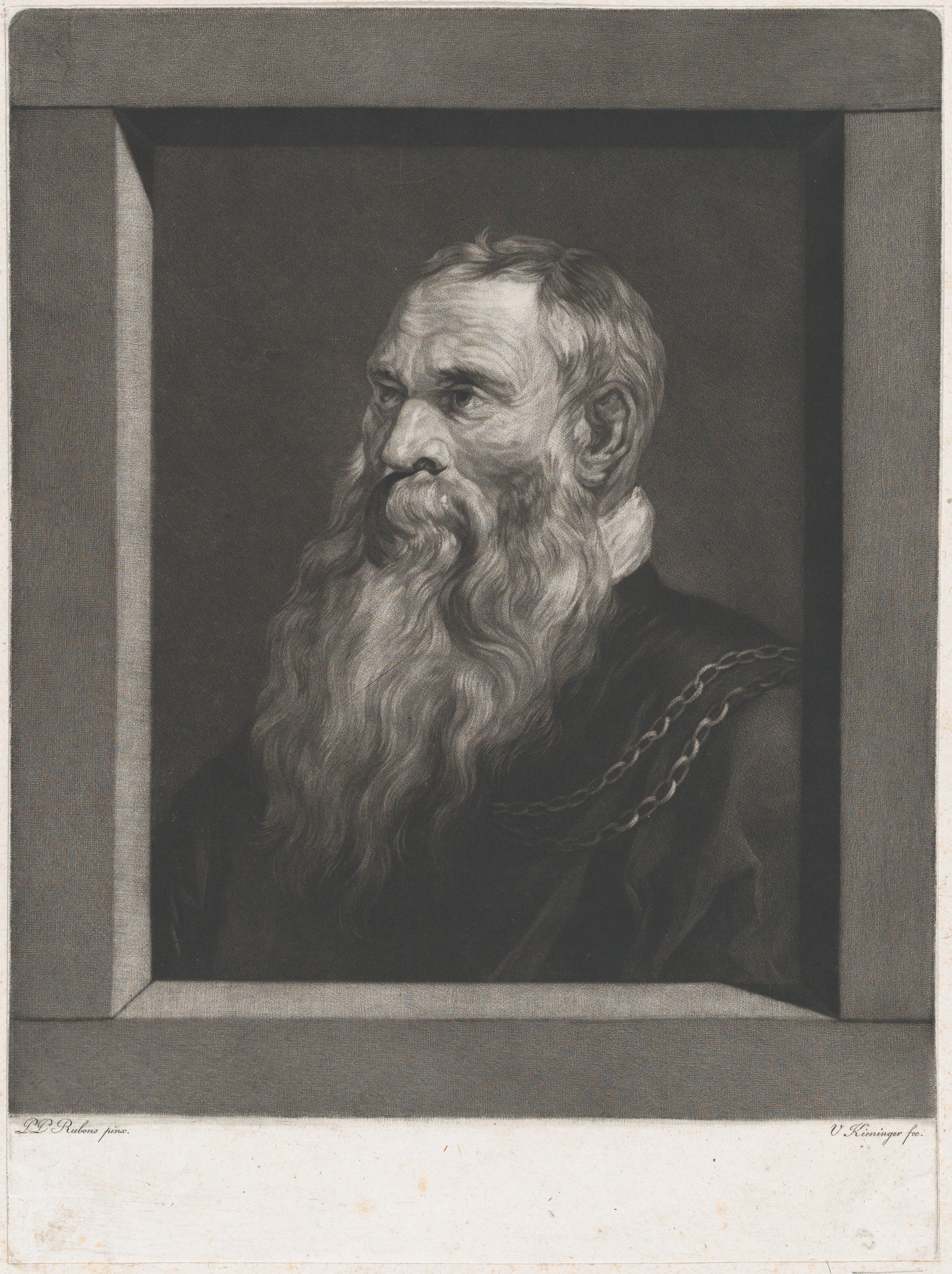
Vincenz Georg Kininger
Vincenz Georg Kininger erhielt zunächst eine Ausbildung zum Stecher, bevor er Professor an der Wiener Akademie wurde. Anders als viele Zeitgenossen, die sich ausschliesslich der Ölmalerei widmeten, meisterte Kininger die Schabkunst. Dabei wird eine Metallplatte mit einem Wiegemesser aufgeraut, sodass ein Grat entsteht, der Tinte aufnimmt. Das Verfahren ermöglicht weiche Licht- und Schattenübergänge, die mit gewöhnlicher Radierung oder Linienstecherei schwer zu erzielen sind.

Biografie
Sein Umgang mit religiösen Motiven wie Saint Philip und Saint Bartholomew beruht auf solchen Tonwertwechseln. Kininger stellte seine Figuren oft vor dunklen Hintergrund, um die körperliche Präsenz der Heiligen hervorzuheben. In seiner Apostelserie, darunter Saint Andrew und Saint Matthew, modellierte er die Formen mit starken Kontrasten. The Transfiguration zeigt, wie klar und strukturiert er komplexe Kompositionen bewältigte.
Moderne Sammler schätzen Kininger für die düstere Atmosphäre seiner Drucke. Tiefe Schwarztöne und weiche Grautöne erzeugen eine nachdenkliche Stimmung, die zu minimalistischen wie traditionellen Innenräumen passt. Seine Werke vermitteln historisches Gewicht, ohne überladen zu wirken. Klare Linien und dramatische Beleuchtung machen Saint James Major als Einzelbild oder Teil einer Galeriewand wirkungsvoll.
Bedeutende Werke
Zum Vergrößern antippen.
Nächster Halt
Stilrichtungen entdecken →
Alle Stilrichtungen der Sammlung, von der Renaissance bis zur Pop-Art.
Ähnliche Künstler


Häufig gestellte Fragen
Wann wurde Vincenz Georg Kininger geboren?
Vincenz Georg Kininger wurde 1767 geboren und starb 1851.Wofür ist Vincenz Georg Kininger bekannt?
Vincenz Georg Kininger ist bekannt für: Vincenz Georg Kininger war ein Meister des Schabstichs im 18. Jahrhundert, bekannt für dramatische religiöse Drucke und seine meisterhafte Verwendung von Licht und Schatten.