



James Heath
James Heath held the position of Historical Engraver to King George III from 1794. While many artists of his era focused on painting, Heath built a commercial empire through the reproduction of major historical scenes. His career survived a significant setback in 1789 when a fire at his residence destroyed a large portion of his stock and several finished plates. This event forced him to restart much of his work, yet he remained one of the most productive figures in the London print trade.

Biography
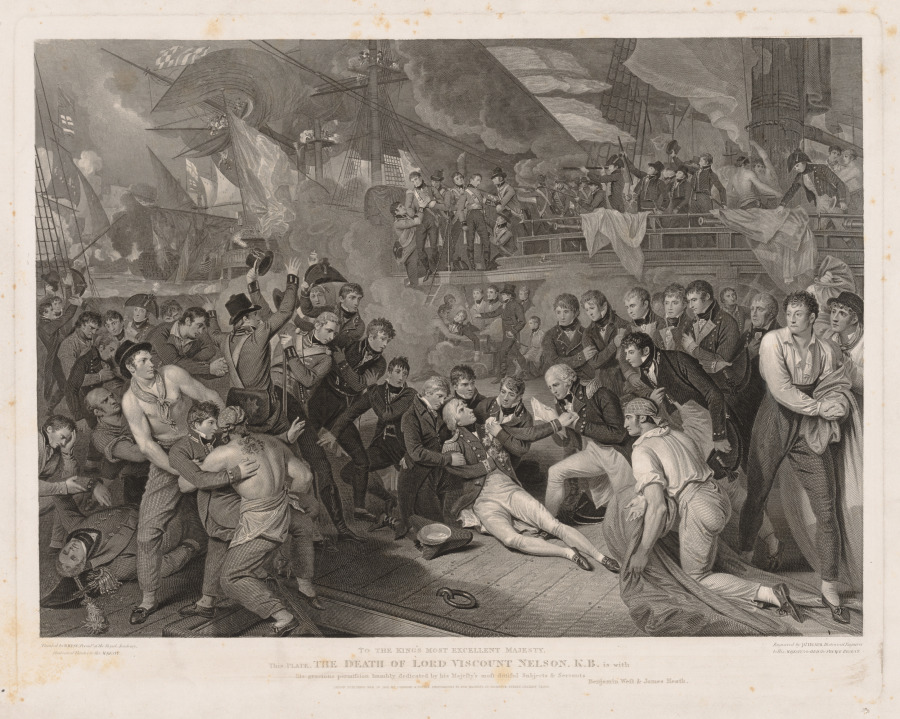
His approach relied on technical precision in line engraving and stipple. Heath specialised in translating the large-scale compositions of painters like John Singleton Copley and Benjamin West into accessible monochrome formats. In works such as Death of Major Pierson and Death of Lord Nelson, he managed complex groups of figures without losing clarity. His Apotheosis of Händel demonstrates his skill in handling allegorical subjects, using varied line weights to suggest depth and texture.
Modern collectors value Heath for the historical record his prints provide. These works offer a window into the naval and military history of the Kingdom of Great Britain. The formal quality of his engravings suits traditional interiors, providing a sense of scale and narrative. His portraits, including that of the Marquis Wellesley, remain sought after for their anatomical accuracy and the dignified presentation of their subjects.
Notable Works
Tap to view larger.
Next stop
Browse the movements →
Every movement in the collection, from the Renaissance to Pop art.
Related Artists


Frequently Asked Questions
When was James Heath born?
James Heath was born in 1757 and died in 1834.What is James Heath known for?
James Heath is known for james Heath was an influential British engraver to King George III, recognised for his large-scale historical prints and precise technical skill in monochrome reproduction.