



Hippolyte Bellangé
Hippolyte Bellangé spent nearly two decades as the director of the Rouen Museum, a role that balanced his output as a painter and lithographer. While his peers often sought the grandeur of Paris, Bellangé used his time in Normandy to refine his observations of military life. He was a student of Baron Gros, but he moved away from the heroic scale of his mentor to focus on the individual experiences of the French infantry.
Biography
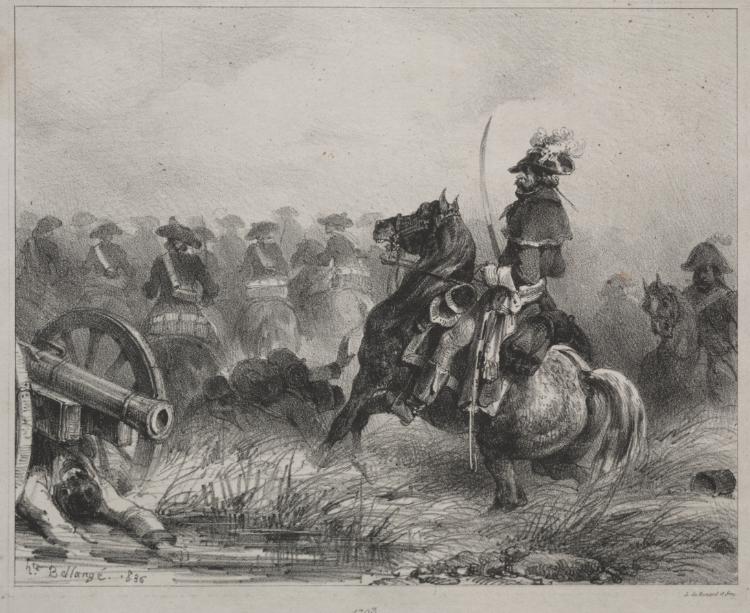
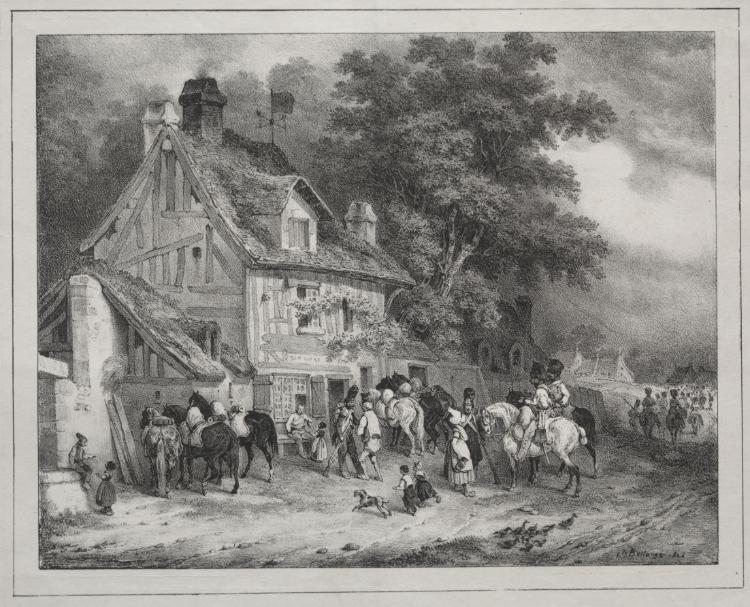
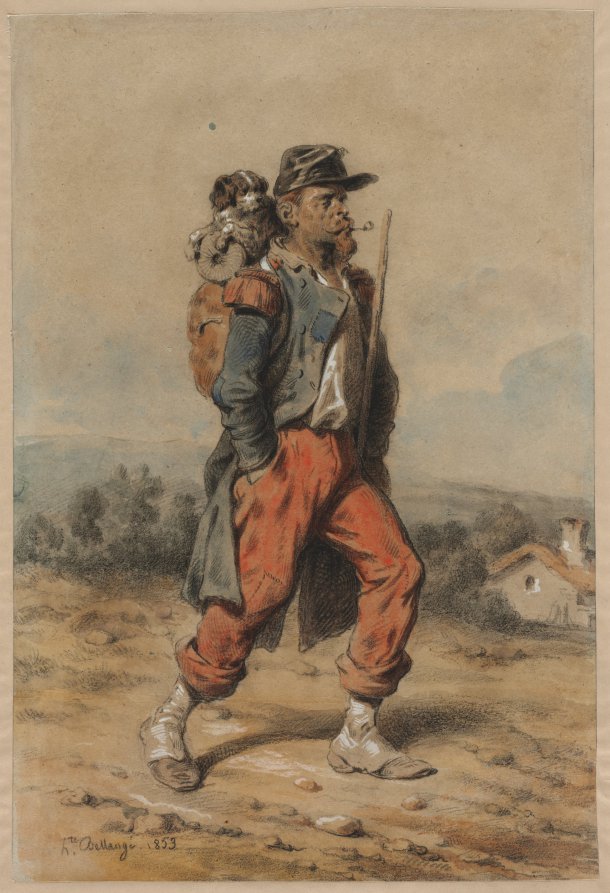
His work is defined by a focus on the French soldier, often depicting the fatigue and daily routines of the Napoleonic wars. Bellangé was a prolific lithographer, producing hundreds of prints that used subtle tonal variations to create depth. He avoided the stiff formality of traditional battle paintings. Instead, he chose to depict moments of rest or the quiet reality of the march. This approach brought a sense of realism to his depictions of the Grande Armée.
Collectors today value Bellangé for his ability to document history through a human lens. His prints record nineteenth-century military culture without the excessive ornamentation common in the period. The clean lines and narrative clarity of his lithographs make them suitable for study spaces or gallery walls. These pieces provide a connection to the Napoleonic era that feels personal and grounded in historical fact.
Notable Works
Tap to view larger.
Next stop
Browse the movements →
Every movement in the collection, from the Renaissance to Pop art.
Frequently Asked Questions
What is Hippolyte Bellangé known for?
Hippolyte Bellangé is known for hippolyte Bellangé was a French painter and lithographer who documented the daily lives and military campaigns of the Napoleonic era with a focus on the common soldier.

