





Giovanni Battista Paggi
Giovanni Battista Paggi lived a life defined by a dramatic shift in direction. Born into a prominent Genoese family in 1554, he initially pursued painting as a pastime. However, after killing a nobleman in a dispute, he was forced into exile in Florence. This sudden change of fortune transformed his hobby into a professional necessity, leading him to study under the masters of the Tuscan school. He eventually returned to Genoa after his sentence was commuted, bringing a new stylistic rigour to his home city.

Biography
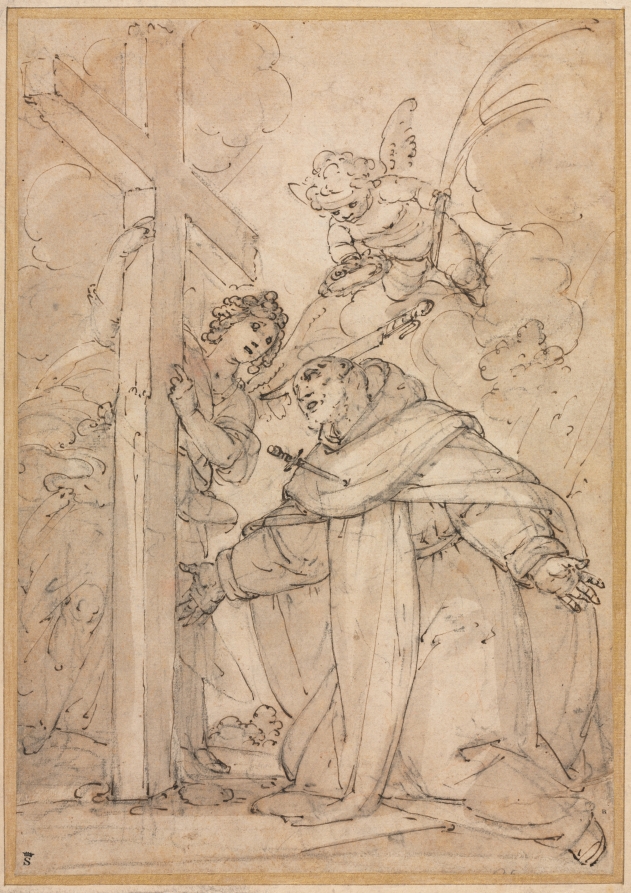
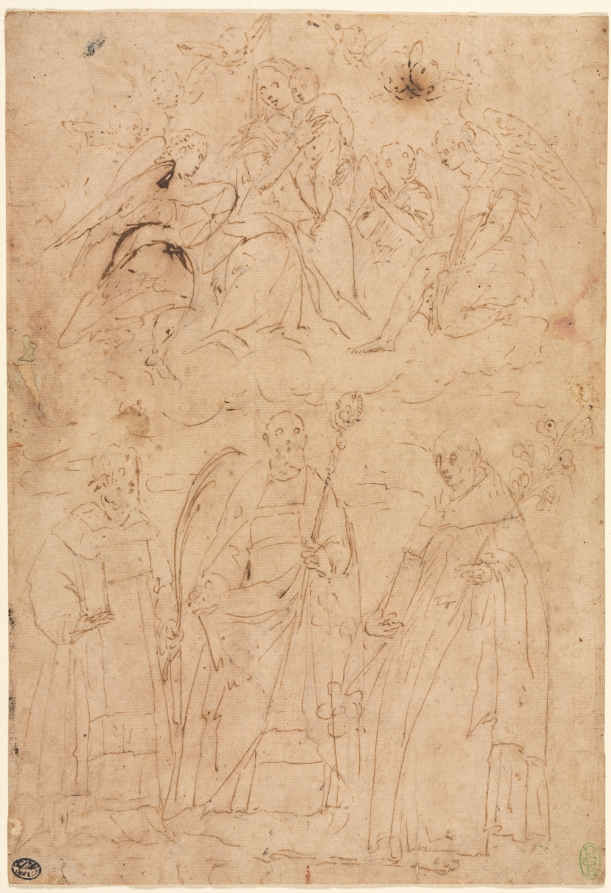
Paggi adopted a refined, academic manner that prioritised clarity and technical precision. His work, such as the Madonna and Child in Glory above Three Saints, demonstrates a balanced composition and a careful study of light. He avoided the chaotic excesses of some of his contemporaries, opting instead for a controlled application of paint and a structured approach to figure drawing. His technical sketches, including those for ceiling decorations featuring Olympian gods and the signs of the zodiac, reveal a disciplined hand and a deep interest in classical motifs.
Modern collectors value Paggi for his technical discipline and the historical narrative embedded in his career. His prints offer a window into the transition between late Mannerism and the burgeoning Baroque style. The clarity of his line work makes his pieces suitable for contemporary spaces, providing a sense of order and historical continuity without overwhelming the viewer.
Notable Works
Tap to view larger.
Next stop
Browse the movements →
Every movement in the collection, from the Renaissance to Pop art.
Related Artists

.jpg)
Frequently Asked Questions
When was Giovanni Battista Paggi born?
Giovanni Battista Paggi was born in 1554 and died in 1627.What is Giovanni Battista Paggi known for?
Giovanni Battista Paggi is known for giovanni Battista Paggi was a Genoese painter who transformed from an aristocratic amateur into a disciplined master during his years of exile in Florence.