

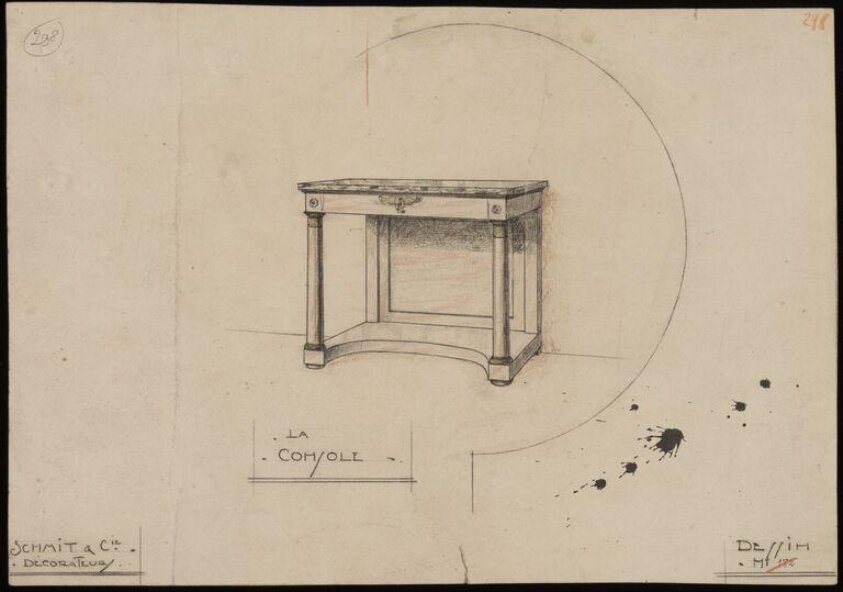


Alfred Schmidt
Alfred Schmidt operated like a scientist in an art school. While his Bauhaus colleagues often focused on expression, he treated the studio as a laboratory for logical experimentation. He attempted to map the human position between the earthly and the cosmic. This approach was not just about aesthetics. He viewed the "all-space" through a lens of esoteric life philosophies. His work sought to balance the cold reality of scientific fact with the psychological needs of the individual.
Biography
His method relied on a systematic theory of elementary forms. He studied how different bodies interacted within a spatial environment. This was a form of organisation that some critics compared to the cold precision of a chess match. He rejected the chaotic romance of earlier artistic movements. Instead, he preferred precise and calculated constructions. Every line and shape followed a specific rule of utility and spatial relationship.
Modern collectors value these works for their clarity and architectural logic. The compositions provide a sense of order that fits well in contemporary interiors. They represent a period when art attempted to solve the problems of social organisation through design. These prints offer a window into the Bauhaus obsession with universal systems. They remain relevant because they address the tension between human emotion and mechanical precision.
Notable Works
Tap to view larger.
Next stop
Browse the movements →
Every movement in the collection, from the Renaissance to Pop art.
Frequently Asked Questions
What is Alfred Schmidt known for?
Alfred Schmidt is known for alfred Schmidt was a Bauhaus instructor who applied scientific logic and systematic theories of form to create precise, architectural compositions that balanced human psychology with cosmic space.

