


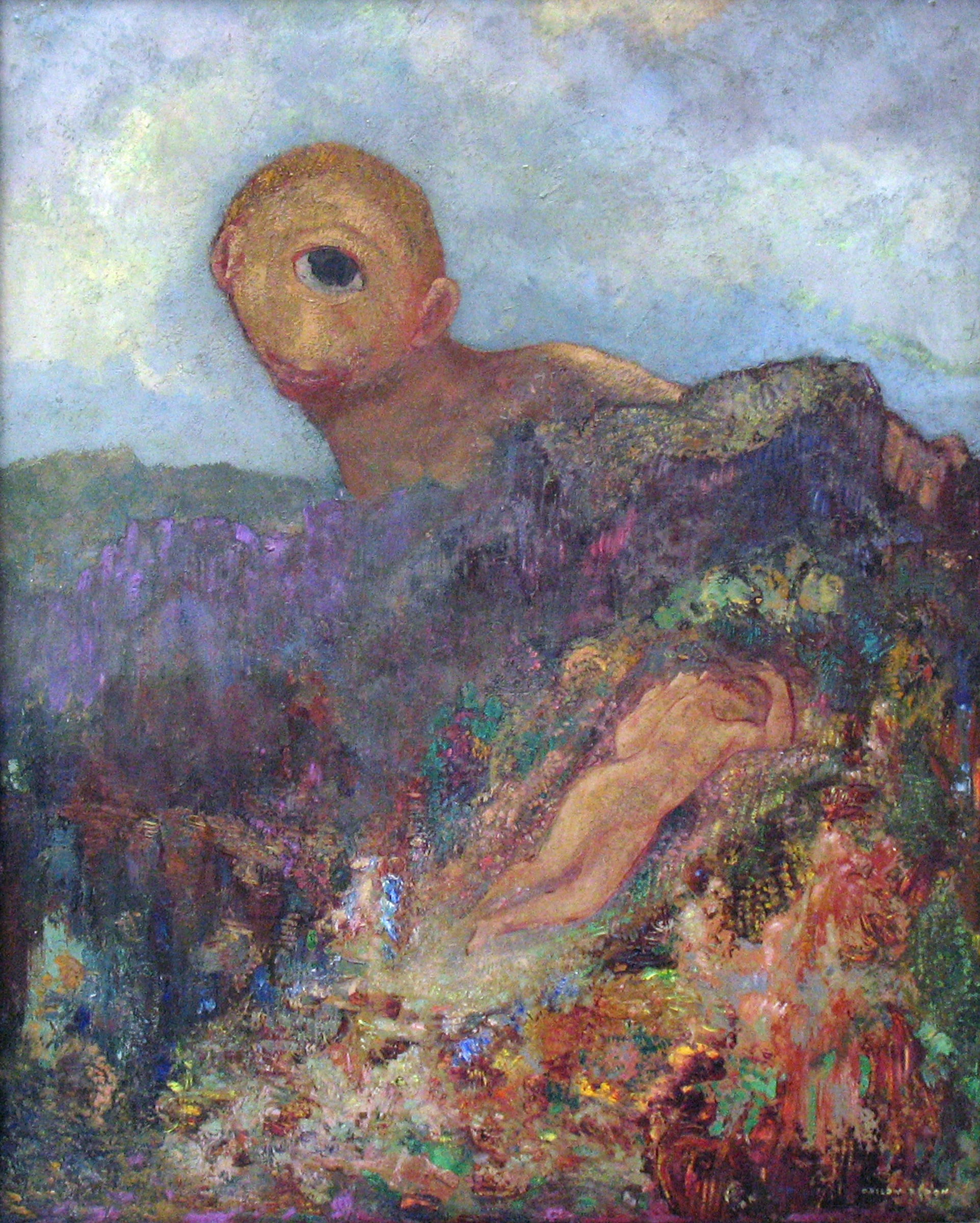
The image of the Cyclops Polyphemus hiding on distant rocks or watching nymphs from afar developed through Renaissance and Baroque visual art. Works by Sebastiano del Piombo and Nicolas Poussin transformed Ovidian mythology into quiet pastoral compositions, exploring the giant's song, human agriculture and hidden desires.
Classical Statues and Renaissance Frescoes
In 1511, the banker Agostino Chigi sought to marry the illegitimate daughter of the Gonzaga family. After those hopes were disappointed, Chigi travelled to Venice, met Francesca Ordeaschi, a young girl of humble stock, and brought her to Rome. In Rome, Chigi commissioned frescoes representing a love story from Greek mythology. The artistic choices for these frescoes drew directly upon an ancient classical statue of Polyphemus in the collection of Cardinal Raffaele Riario.
The French traveller Claude de Bellièvre saw Cardinal Riario's statue in Rome around 1514 or 1515. In his unpublished manuscript titled Noctes Romanae, Bellièvre described the marble as an image of physical power and submission. He noted that the statue possessed a huge, hairy head, a beard and empty eye sockets, with its single eye in the centre of the forehead gouged out by Ulysses. Sebastiano del Piombo used this marble source for his fresco of Polyphemus created around 1512-13, painted alongside Raphael's fresco of Galatea. Sebastiano modified the ancient sculpture by replacing the body of the dead Acis between the giant's legs with a pastoral stick, a zuffolo pipe and a companion dog.
In Ovid's Metamorphoses, Polyphemus sings his song of love and loyalty to Galatea from a high rock on his island. Galatea flees from the giant after he kills her lover Acis. Sebastiano's fresco shows the seated Cyclops looking off into the distance, holding his musical instruments to sing rather than engaging in violent action. The fresco suited Chigi's desire to depict a powerful man's love for a beautiful nymph.
Poussin and the Calmer Giant of 1627
Nicolas Poussin addressed the myth of Acis and Galatea in a painting created between 1627 and 1628, now held in the National Gallery of Ireland in Dublin. In Ovid's poem, Polyphemus is described as highly agitated and satirical when serenading Galatea. Poussin altered this disposition significantly. His painting depicts Polyphemus sitting quietly on a rock in the background, playing his musical pipes while seemingly unaware of the lovers embracing below.
The foreground of Poussin's 1627 work displays Acis and Galatea embracing in a kiss. Ovid describes Acis as a youth of sixteen with soft cheeks. Galatea is a deity and nereid, making her the superior partner in the relationship. Poussin depicts Galatea as the active lover, gazing into Acis's eyes and holding his neck. Above the water, two erotes fly and shoot arrows of love at cavorting sea gods, who then accost uninhibited nereids.
While Ovid describes Galatea's repulse of Polyphemus as forceful and obstinate, Poussin presents her demeanour toward Acis as mild. The uninhibited nereids offering no resistance to the sea gods contrast with the unstated tension of Galatea's distaste for Polyphemus's advances. In Ovid's narrative, Polyphemus is feminised by his song, whereas Galatea becomes masculinised by her stubborn resistance to the giant's unwanted desires.
The Sicilian Countryside and Human Agriculture
In 1649, Poussin completed the oil painting Landscape with Polyphemus for Jean Pointel, a French banker and silk merchant. Pointel also commissioned Poussin's Eliezer and Rebecca, now in the Louvre. The 1649 painting, measuring 150 by 198 centimetres, is preserved in the State Hermitage Museum in St. Petersburg. The composition presents a moment in early human history when mankind discovered the practices of agriculture.
In the middle distance of the St. Petersburg canvas, men are shown digging, ploughing and watching over their agricultural flocks. Classical mythology associates the Cyclopes with the Golden Age that existed before the invention of agriculture, a period when humans lived entirely off the natural fruits of the earth. Polyphemus sitting on the mountain top symbolises this older age that recedes as human cultivation advances across the land.
The background depicts Polyphemus seated on a high mountain top, playing his pipes to an invisible Galatea who disports herself in the sea visible on the far right. The setting represents the contrast between barren mountains and fertile plains typical of the Sicilian countryside, particularly in western Sicily. Poussin rendered this general Sicilian environment without copying a single specific geographic site.
Hidden Nymphs and Watching Satyrs
According to the writer Félibien, Jean Pointel specifically requested that Poussin paint a composition containing several girls showing different aspects of female beauty. Poussin fulfilled this request in the 1649 Hermitage painting by placing three semi-nude water nymphs in the immediate foreground. These water nymphs represent the fertility that water brings to the soil. One of the nymphs features hair of a blue-green colour matching the surrounding reeds.
Behind bushes on the right side of the canvas, satyrs hide and secretly gaze at the nymphs. These satyrs act as traditional symbols of animal fertility, complementing the vegetable fertility symbolised by the water nymphs. The most prominent nymph in the foreground is identified as Galatea. She is shown wringing out her wet hair while listening to the sound of Polyphemus's distant music.
This details Ovid's Metamorphoses, where Galatea describes hiding beneath a rock and resting in the lap of Acis while hearing the giant's rustic piping echo across the mountains. Ovid notes that Charybdis combed Galatea's hair while Galatea recounted her tale. By placing the hiding satyrs near the resting nymphs, Poussin connects Ovidian storytelling with visual themes of hidden observation.
Narrative Contrast and Visual Tradition
The treatments of Polyphemus by Sebastiano del Piombo and Nicolas Poussin establish visual patterns for representing the monster in myth. Rather than portraying the giant solely as a violent brute, both artists show Polyphemus removed from the immediate central action, perched on rocks or distant mountains with his musical instruments. The seated position originates partly from the classical marble once owned by Cardinal Riario.
In Poussin's paintings, the physical separation between the giant and Galatea heightens the narrative contrast. In the 1627 Dublin painting, Polyphemus plays calmly in the background while Acis and Galatea embrace below. In the 1649 St. Petersburg painting, Polyphemus plays on his distant mountain top while Galatea listens from the foreground among her companion nymphs.


