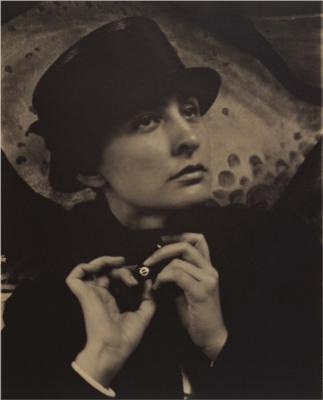
Vaclav Vytlacil
Vaclav Vytlacil was among the first Americans to seek out Hans Hofmann in Munich during the 1920s. This period in Europe proved more than a simple study trip. Vytlacil became a link between European modernism and the growing New York art scene. He later helped persuade Hofmann to teach in the United States, which altered the course of American art education. This direct connection to the source of abstract theory gave his work a structural foundation that many of his peers lacked.

Biography
His approach combined the structural logic of Cubism with a personal interest in nature. In works like Rocky Mountains and Blue Flowers, he used flat planes of colour and sharp, dark outlines to define space. He avoided traditional perspective. Instead, he built compositions through the interaction of shapes and the weight of his brushstrokes. His style is defined by a sense of controlled energy where every mark has a purpose.
Modern collectors value Vytlacil for his ability to balance abstraction with recognisable subjects. His prints provide a sophisticated aesthetic that complements contemporary interior design. The work is direct and lacks unnecessary ornamentation. Because he often painted on both sides of a surface, as seen in Untitled (recto and verso), his process shows a constant search for form. His art remains a popular choice for those who appreciate the origins of American modernism.
Notable Works
Tap to view larger.
Next stop
Browse the movements →
Every movement in the collection, from the Renaissance to Pop art.
Frequently Asked Questions
When was Vaclav Vytlacil born?
Vaclav Vytlacil was born in 1892 and died in 1984.What is Vaclav Vytlacil known for?
Vaclav Vytlacil is known for vaclav Vytlacil was a pioneer of American abstraction who combined European modernist structure with organic subjects to create bold, geometric compositions for the modern home.


_%E2%80%93_LOC.jpg)