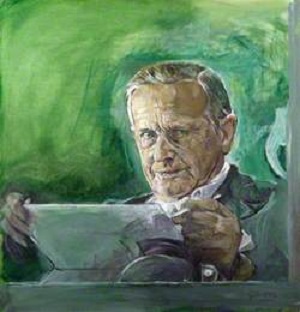


Thomas Hearne
Thomas Hearne began his career as an apprentice to an engraver before travelling to the West Indies. In 1771, he accompanied Sir Ralph Payne to the Leeward Islands to record the topography of the British colonies. His duties involved creating precise visual records of the islands and coastal harbours. This period of overseas service provided him with a disciplined approach to observation that he later applied to the English countryside.

Biography
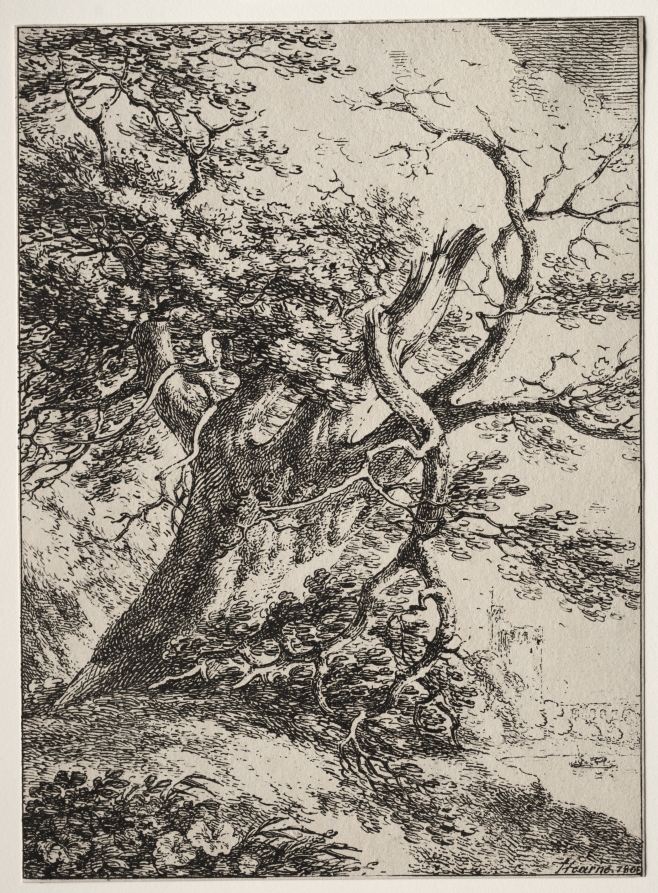
Hearne became a primary figure in the development of the English watercolour tradition. His work is defined by clear pen outlines and restrained washes of grey or yellow. Unlike many contemporaries who sought dramatic effects, Hearne focused on architectural accuracy and the quiet details of rural life. In works like Pristwick Church and Landscape with an Oak Tree, he used a methodical layering process to build form. He was also an early adopter of lithography, contributing to the Specimens of Polyautography collection.
Collectors value Hearne for his technical precision and his documentation of pre-industrial Britain. His prints offer a calm aesthetic that suits contemporary interiors. The muted colour palettes and architectural focus provide a sense of order and historical continuity. These works function as both artistic studies and historical records of the eighteenth-century British environment.
Notable Works
Tap to view larger.
Next stop
Browse the movements →
Every movement in the collection, from the Renaissance to Pop art.
Frequently Asked Questions
When was Thomas Hearne born?
Thomas Hearne was born in 1744 and died in 1817.What is Thomas Hearne known for?
Thomas Hearne is known for thomas Hearne was an English topographical artist known for his precise architectural drawings and early contributions to the development of British watercolour.