

Rolf Nesch
Rolf Nesch moved to Norway in 1933 to escape the political climate in Germany. He settled on a farm in Hallingdal. While many printmakers used flat copper plates, Nesch began soldering metal scraps and wire onto his surfaces. This method turned his printing plates into three-dimensional sculptures. He often used found objects from his rural surroundings to create these textures.

Biography
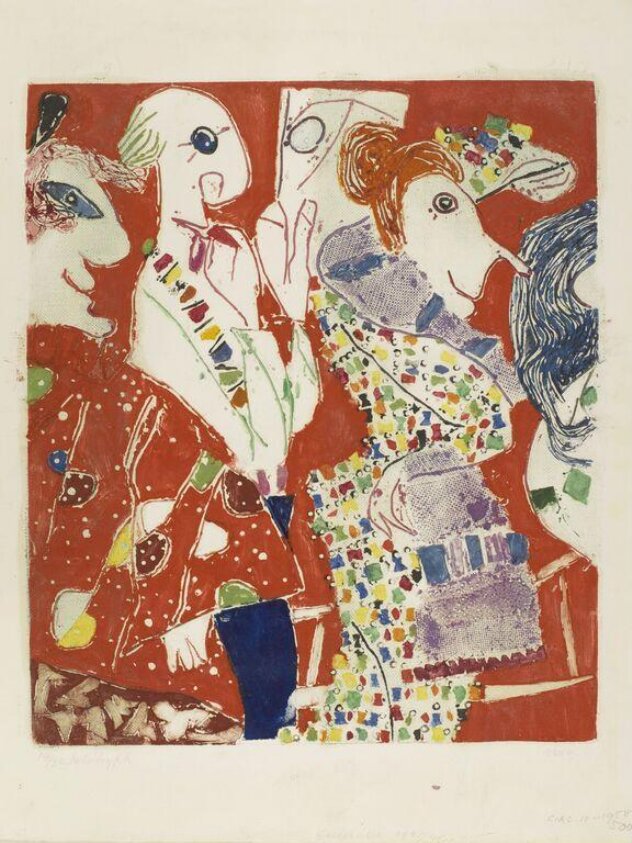
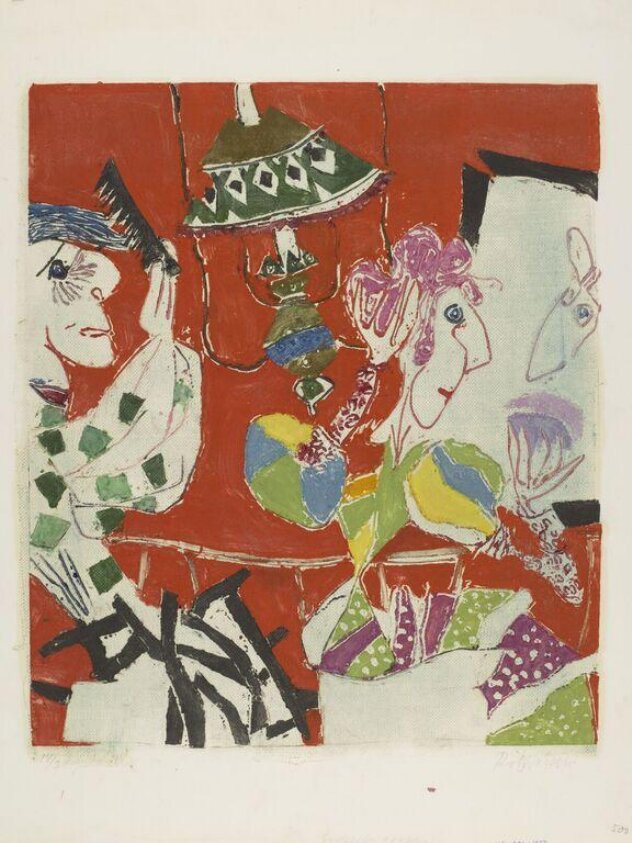
His technique, known as the material print, created deep indentations and heavy layers of ink on paper. Works like Heraldic Goose and Dance on the Wharf demonstrate this tactile quality. Nesch avoided traditional etching acids in favour of physical construction. He manipulated copper wire to define forms and used perforated metal sheets to create patterns. This approach gave his prints a physical presence that differed from standard graphic arts.
Modern collectors value Nesch for his experimental spirit and the physical texture of his work. His prints, such as the Portrait of Mrs. Gauss, Heidenheim or the Martyrdom of Saint Sebastian: Triptych, possess a structural quality that suits contemporary interiors. The bold lines and industrial materials provide a sense of weight. These pieces offer a bridge between traditional printmaking and modern sculpture.
Notable Works
Tap to view larger.
Next stop
Expressionism →
Explore the artists and ideas of Expressionism.
Related Artists


Frequently Asked Questions
When was Rolf Nesch born?
Rolf Nesch was born in 1893 and died in 1975.What art movement was Rolf Nesch part of?
Rolf Nesch was associated with Expressionism.What is Rolf Nesch known for?
Rolf Nesch is known for rolf Nesch was a German-born Norwegian artist who transformed printmaking by soldering metal wire and mesh directly onto his printing plates to create textured material prints.