

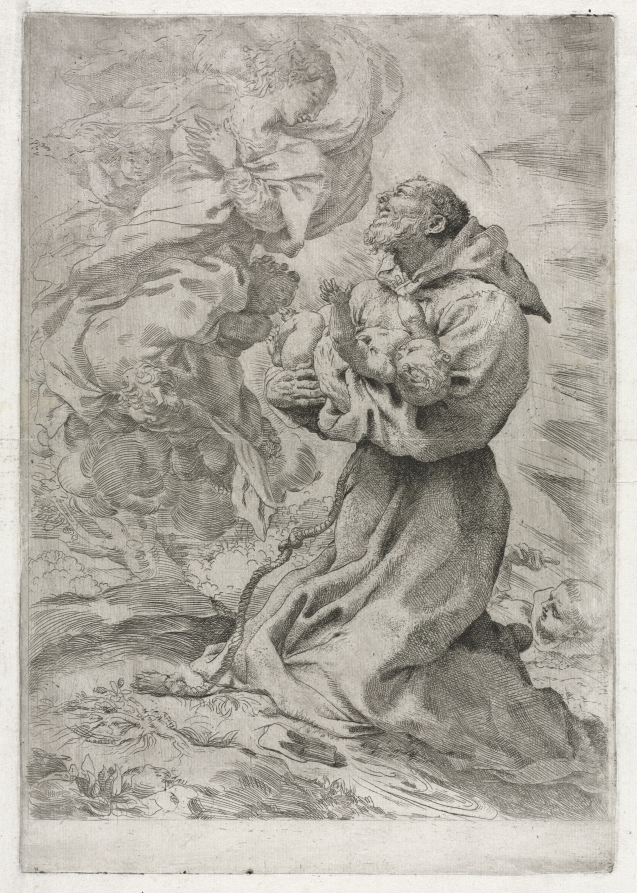


Pietro Faccini
Pietro Faccini började sin karriär senare än de flesta och gick in på Carracciakademin i Bologna när han redan var i 20-årsåldern. Han gick snabbt från att vara elev till att bli konkurrent. Förhållandet till Annibale Carracci blev ansträngt, vilket ledde till att Faccini öppnade en egen, konkurrerande skola. Förändringen innebar att han lämnade kamraternas disciplinerade teckningskonst för en friare, experimentell teknik.

Biografi
Faccini är känd för en särpräglad färgbehandling som förebådar senare barockutvecklingar. Hans fladdrande, nervösa penseldrag gav gestalterna en känsla av rörelse. Till skillnad från högrenässansens solida former tycks hans figurer ofta lösas upp i ljuset. Paletten innehöll ovanliga skimrande toner och bleka rosa nyanser, som i verk som *The Virgin and Child with Saints* och hans olika altartavlor i Bologna.
Samlare i dag uppskattar Faccini för hans uttrycksfulla teckning och skissernas atmosfäriska kvalitet. Teckningarna har en spontanitet som känns modern jämfört med det sena 1500-talets stela kompositioner. Eftersom hans karriär avbröts av hans tidiga död 1602 är de bevarade verken relativt sällsynta. Trycken och målningarna bildar en bro mellan Carracciernas strukturerade värld och 1600-talets dramatiska känslouttryck.
Viktiga verk
Tryck för att förstora.
Nästa anhalt
Utforska konstriktningarna →
Alla konstriktningar i samlingen, från renässansen till popkonsten.
Vanliga frågor
När föddes Pietro Faccini?
Pietro Faccini föddes 1562 och dog 1602.Vad är Pietro Faccini känd för?
Pietro Faccini är känd för att Pietro Faccini var en bolognesisk målare vars följsamma penselföring och skimrande färger utmanade Carracciakademins traditionella teckningskonst under det sena 1500-talet.