



Joseph von Führich
Joseph von Führich began his career in a small Bohemian town where he learned his craft from his father. He gained recognition after illustrating Gottfried August Bürger’s "Wild Huntsman", which caught the attention of patrons in Prague. This success allowed him to travel to Rome. There, he joined a group of artists living in an abandoned monastery. These painters lived like monks to focus on spiritual art, rejecting modern academic styles for the clarity of the late Middle Ages.

Biography
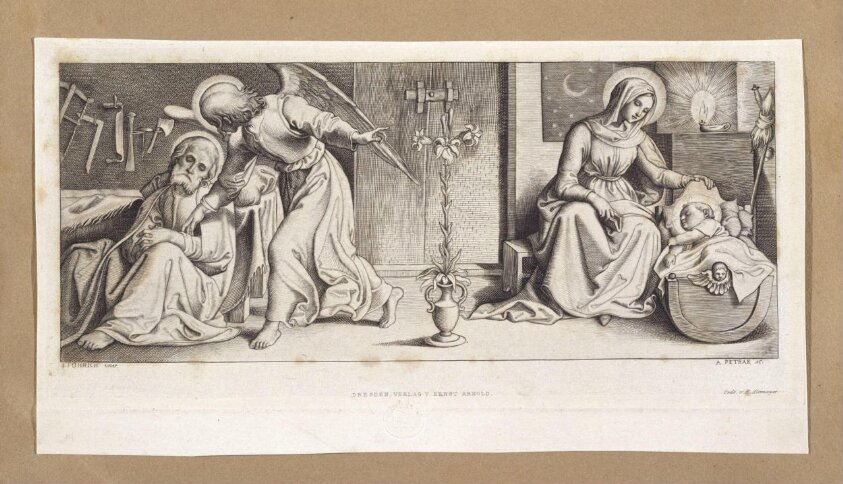
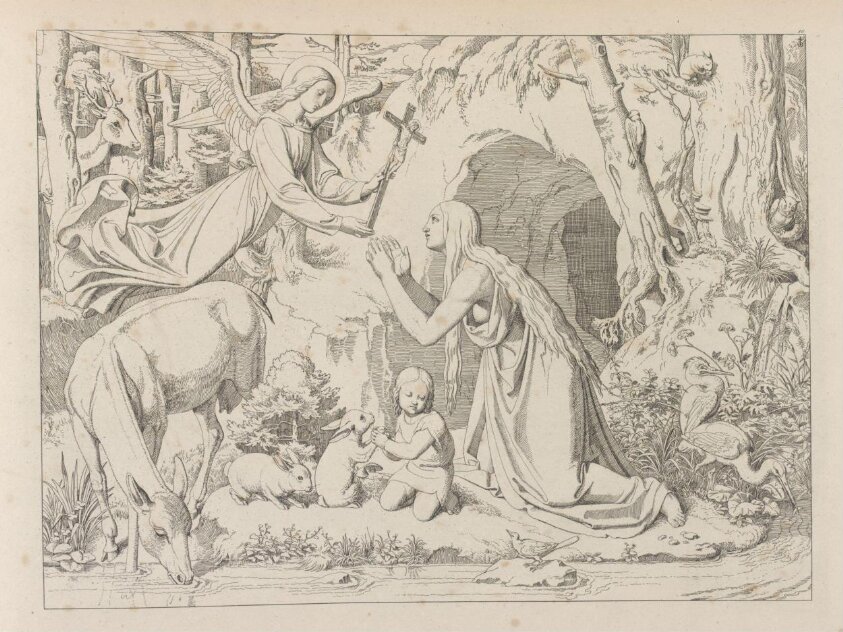
His work focuses on precise draughtsmanship and clear narrative structures. In pieces like "Marriage at Cana" and "Adoration of Christ", Führich avoids heavy shadows or blurred brushwork. He uses firm outlines and balanced compositions to tell biblical stories. This style was a deliberate reaction against the dramatic, emotional excess of the Baroque period. He preferred the calm, structured logic found in early Renaissance frescoes, like those in the cathedrals of Florence. The result is art that feels both orderly and quiet.
Modern collectors value Führich for the graphic quality of his religious scenes. His prints, such as "Thy Kingdom Come", possess a clean feel that fits well in minimalist or traditional rooms. The lack of visual clutter makes these works easy to read from a distance. Because his focus was on line rather than painterly texture, his compositions translate exceptionally well to paper. They provide a sense of stillness and contemplation without the visual noise of later movements.
Notable Works
Tap to view larger.
Next stop
Browse the movements →
Every movement in the collection, from the Renaissance to Pop art.
Frequently Asked Questions
When was Joseph von Führich born?
Joseph von Führich was born in 1800 and died in 1876.What is Joseph von Führich known for?
Joseph von Führich is known for joseph von Führich was an Austrian painter of the Nazarene movement known for his clear, linear religious compositions and his devotion to early Renaissance styles.

