

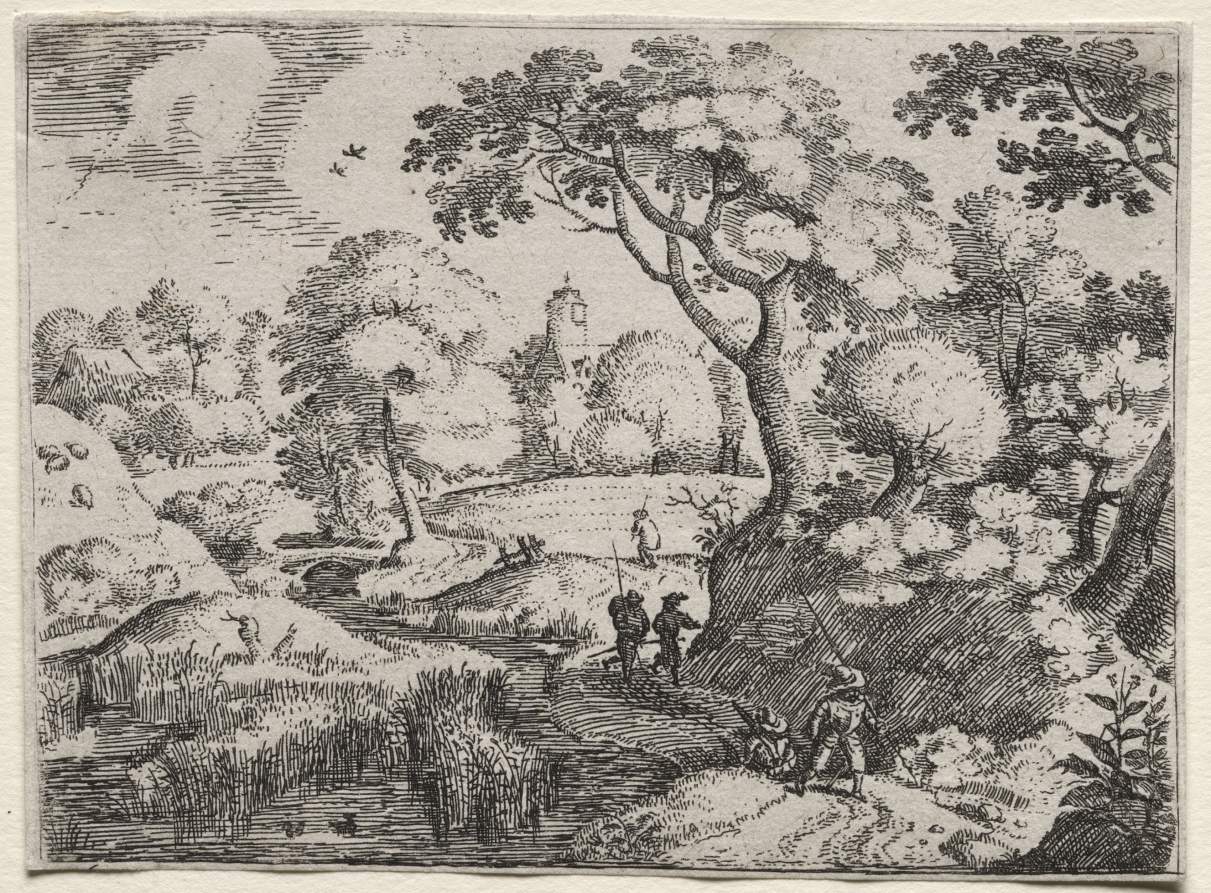


Jacob Savery
Jacob Savery is remembered for his skill in mimicking the style of Pieter Bruegel the Elder. He produced numerous drawings and paintings that were so close to the earlier master's hand that they were accepted as originals for centuries. This technical mimicry was a calculated move in the Amsterdam art market. It allowed him to satisfy the high demand for Bruegel's work among local collectors.
Biography
His work belongs to the Northern Mannerist tradition. Savery focused on small-scale compositions filled with minute details. In The Battle between the Israelites and the Hordes of Amalek, he fits vast crowds into a compact space. He used fine lines and a restrained palette to define individual figures. His training under Hans Bol influenced his ability to render human figures and animals with precision. He often placed these figures within wide outdoor settings.
Collectors today value Savery for his ability to create a sense of scale in small formats. His work offers a window into the late sixteenth-century interest in historical and biblical narratives. These prints provide a sophisticated look for home interiors. They offer a density of detail that rewards close inspection. His style bridges the gap between the older Flemish traditions and the emerging Dutch Golden Age.
Notable Works
Tap to view larger.
Next stop
Browse the movements →
Every movement in the collection, from the Renaissance to Pop art.
Frequently Asked Questions
When was Jacob Savery born?
Jacob Savery was born in 1560 and died in 1603.What is Jacob Savery known for?
Jacob Savery is known for jacob Savery was a Dutch Mannerist painter known for his precise small-scale works and his ability to emulate the style of Pieter Bruegel the Elder.


