




Giuseppe Bernardino Bison
Giuseppe Bernardino Bison worked as a scenographer for the Teatro Nuovo in Trieste, where he developed a talent for spatial illusion. Unlike many contemporaries who remained in one city, Bison moved frequently between Venice, Trieste and Milan to secure commissions for private palaces. His versatility allowed him to produce everything from large-scale frescoes to small, private drawings. He often repurposed classical motifs for domestic settings, making grand art accessible to the rising merchant class of the nineteenth century.

Biography
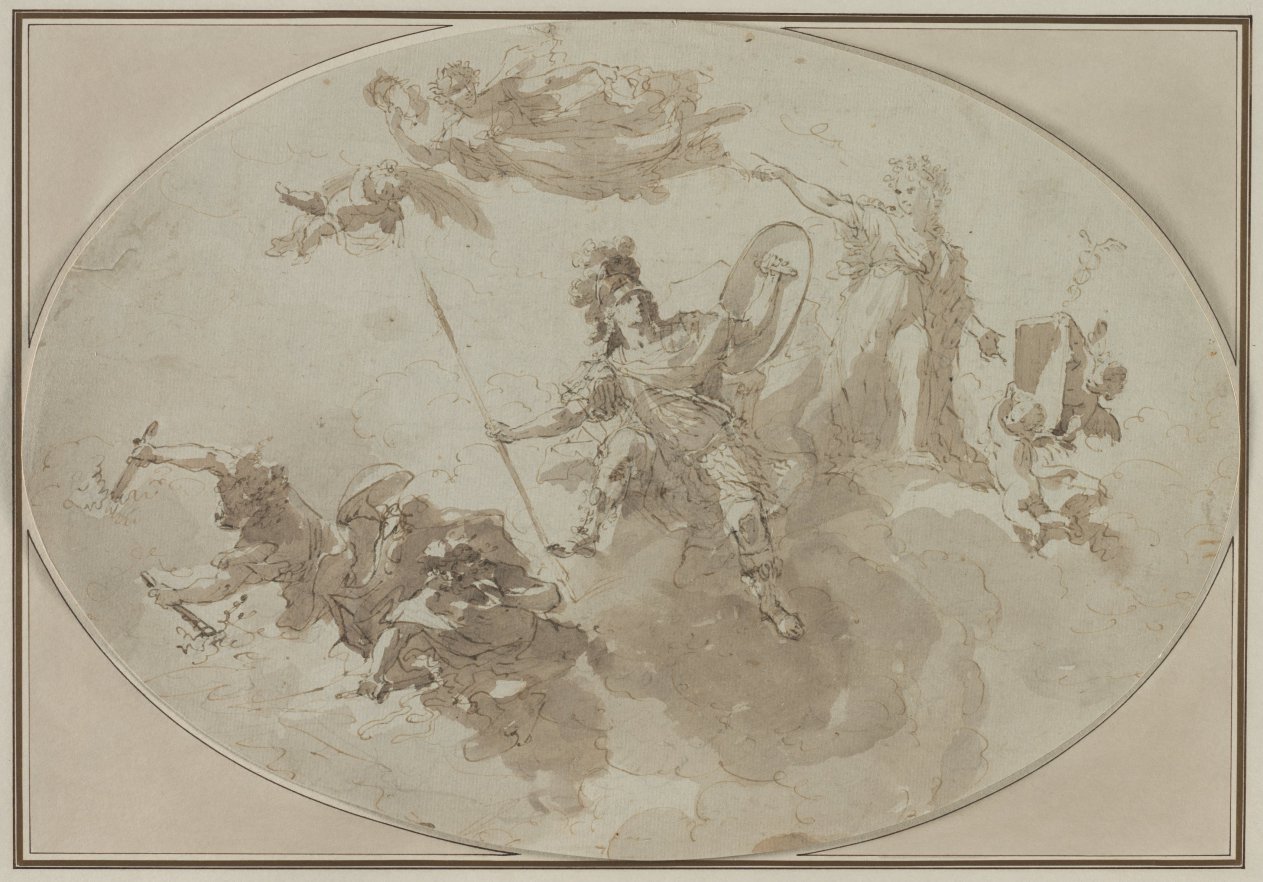
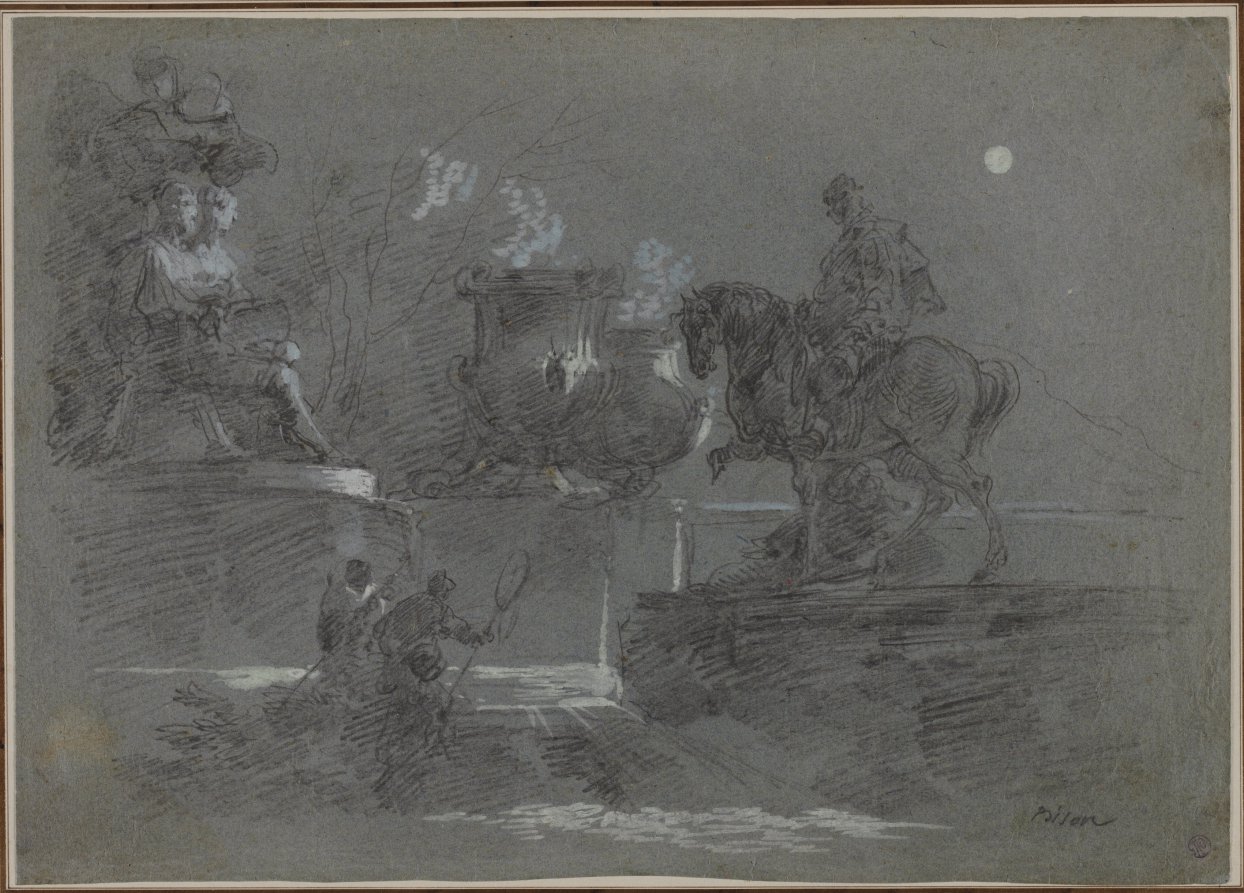
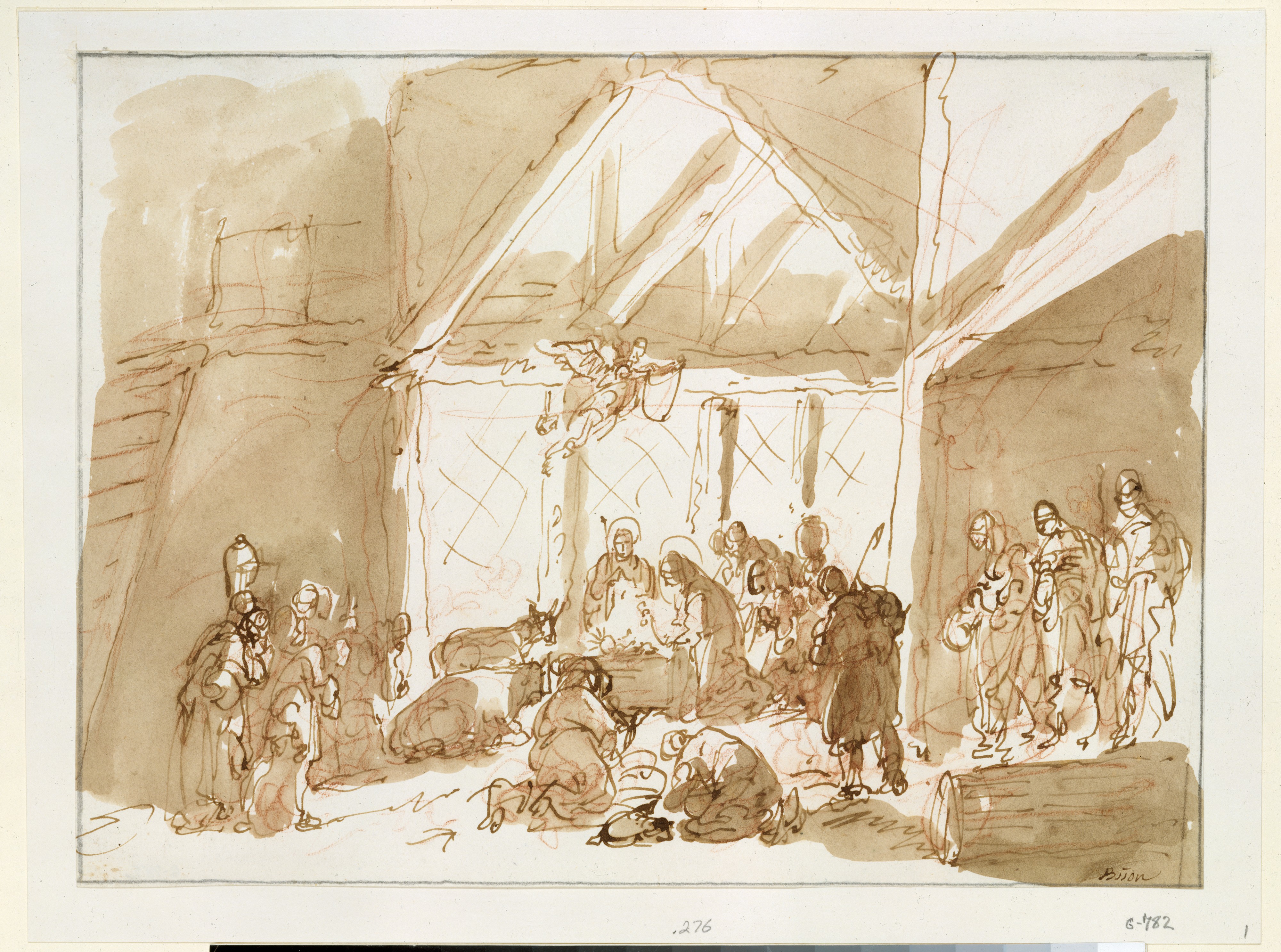
His style bridges the gap between the light touch of the Rococo and the structured clarity of Neoclassicism. In works like "Three Designs for Ceiling or Wall Painting in Neo-Classic Grottesche Style", Bison demonstrates a mastery of the "grottesche" technique, using figures and floral swags. His sketches, such as "Zes zwevende engeltjes met bloemenkransen", show a rapid, confident hand. He used light to define form, often placing figures in dramatic settings like his "Monumental Sculpture in a Moonlit Park".
Bison's work appeals to those who appreciate the technical skill of the Old Masters without the heavy religious weight of earlier eras. His drawings of human figures and architectural studies provide a sophisticated, academic aesthetic for modern interiors. The neutral tones and balanced compositions of his Neoclassical designs suit contemporary rooms. These prints offer a connection to the grand tradition of Italian decorative art through a lens of private, intimate study.
Notable Works
Tap to view larger.
Next stop
Browse the movements →
Every movement in the collection, from the Renaissance to Pop art.
Frequently Asked Questions
When was Giuseppe Bernardino Bison born?
Giuseppe Bernardino Bison was born in 1762 and died in 1844.What is Giuseppe Bernardino Bison known for?
Giuseppe Bernardino Bison is known for giuseppe Bernardino Bison was a prolific Venetian draughtsman and decorator known for blending Neoclassical structure with the light, airy traditions of the Italian Rococo.