



Frederick G. Becker
Frederick G. Becker started his career during the Great Depression. He was among the youngest artists hired by the Works Progress Administration graphic arts division in New York. While his peers often focussed on social realism, Becker turned towards surrealism and technical experimentation. He later joined the influential Atelier 17 studio. There, he worked alongside Stanley William Hayter to push the boundaries of traditional printmaking.
Biography
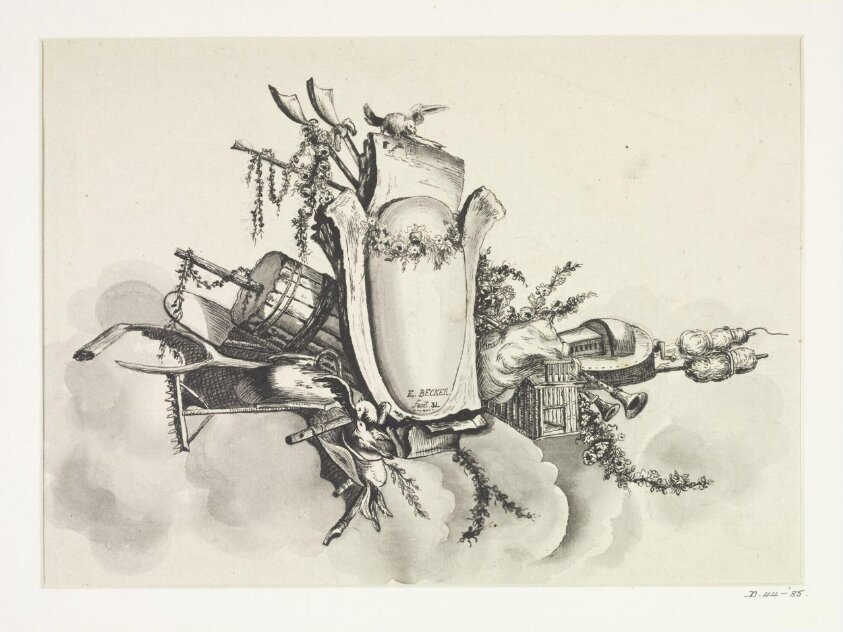
The artistic approach of Frederick G. Becker involves a balance of whimsical figures and abstract geometry. He used wood engraving and etching to produce sharp lines and rhythmic patterns. In his work 'Two Poems with Birds', he used negative space to create a sense of motion. Becker moved away from literal representation. He practised a style that combined surrealist ideas with precise, almost mathematical arrangements. He often treated the printing plate as a space for spontaneous discovery.
Collectors of fine art prints find his work appealing for its graphic clarity. His prints represent a bridge between early twentieth-century figuration and post-war abstraction. The clean lines and balanced compositions suit modern interior design. Becker eventually shared his expertise as a teacher at Washington University in St. Louis. He avoided cluttered layouts. He chose instead to focus on the interaction between form and the paper surface.
Notable Works
Tap to view larger.
Next stop
Browse the movements →
Every movement in the collection, from the Renaissance to Pop art.
Related Artists
_%E2%80%93_LOC.jpg)



Frequently Asked Questions
When was Frederick G. Becker born?
Frederick G. Becker was born in 1913 and died in 2004.What is Frederick G. Becker known for?
Frederick G. Becker is known for frederick G. Becker was a leading American printmaker who combined surrealist imagery with the technical precision of the Atelier 17 school to create rhythmic, abstract compositions.