



Charles Aubry
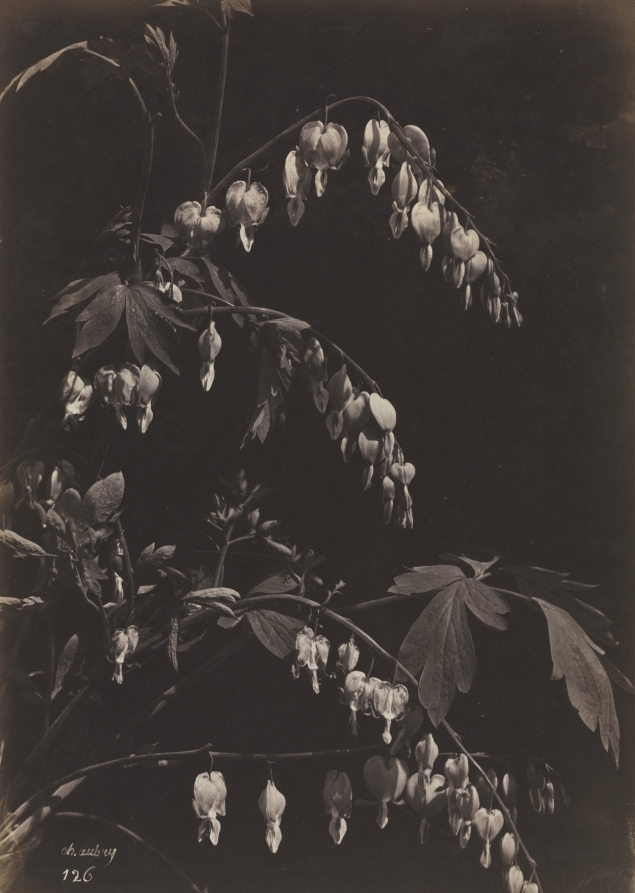
Charles Aubry began his career as a pattern designer for the Parisian textile and wallpaper industries. He did not take up photography until his fifties. While he is known for botanical subjects, he also documented historical works like the Pleureur sculptures from the tomb of Isabella of Bourbon. In 1864, he established a company to produce these photographic models for designers and architects who needed static subjects for study.
Biography
His artistic approach was defined by a preference for structural clarity over decorative arrangement. Aubry used the wet-plate collodion process to record the physical details of leaves and flowers. He frequently stripped away the context of the natural world by placing his subjects against neutral backgrounds. This technique forced the viewer to observe the physical geometry and surface texture of each specimen rather than its colour.
These prints appeal to modern collectors because of their austere and formal qualities. The work occupies a space between scientific record and fine art. His compositions of plaster casts and botanical arrangements possess an architectural stillness that complements contemporary interiors. They provide a sophisticated alternative to traditional floral art by focusing on the raw form of the natural world.
Notable Works
Tap to view larger.
Next stop
Browse the movements →
Every movement in the collection, from the Renaissance to Pop art.
Frequently Asked Questions
What is Charles Aubry known for?
Charles Aubry is known for charles Aubry was a nineteenth-century French photographer who created precise botanical studies originally intended as reference tools for industrial designers and art students.