



Auguste III Blanchard
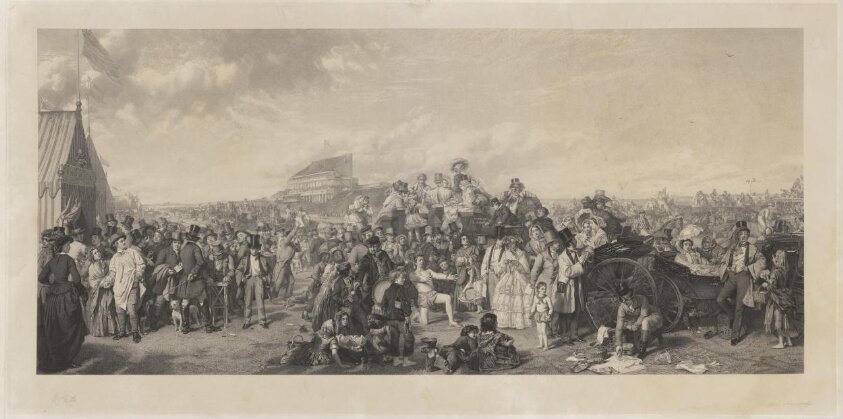
Auguste III Blanchard belonged to a family of engravers that spanned four generations. While many artists of his time transitioned to photography, Blanchard maintained a strict adherence to the traditional burin. He spent years on a single copper plate. His work on "The Derby Day" by William Powell Frith took several years to complete. This patience allowed him to translate oil paintings into monochrome prints with a level of clarity that mechanical processes could not match.

Biography
Blanchard specialised in line engraving. He used varying widths of cut lines to create the illusion of light and shadow. His technique focused on the texture of skin and fabric. In "A Bacchante," he captured the soft curves of the figure using precise, rhythmic strokes. He chose to work with artists like Lawrence Alma-Tadema. Their classical subjects suited his clean style. The resulting prints possess a crispness that defines the Academic style of the nineteenth century.
Collectors today value Blanchard for his technical precision. His prints offer a window into the Victorian art market where engraving was the primary way to own a masterpiece. The monochrome palette fits well with modern interior design. These works provide a sense of historical weight without the visual noise of a full-colour painting. They represent a period when craft and reproduction were inseparable.
Notable Works
Tap to view larger.
Next stop
Browse the movements →
Every movement in the collection, from the Renaissance to Pop art.
Frequently Asked Questions
When was Auguste III Blanchard born?
Auguste III Blanchard was born in 1819 and died in 1898.What is Auguste III Blanchard known for?
Auguste III Blanchard is known for auguste III Blanchard was a master of nineteenth-century line engraving, known for his precise monochrome reproductions of classical and contemporary Academic paintings.


