

Samling
Pierre Puvis De Chavannes
Utforska utvalda konsttryck för unika hem och medvetna inredningar.
Föreslagna filter
-
 Den heliga Genovevas barndom - Pierre Puvis de Chavannes
Print
Ordinarie pris Från £28.00 GBPReapris Från £28.00 GBP Ordinarie pris -
 Sankta Genevieve förser staden Paris med förnödenheter efter belägringen - Pierre Puvis de Chavannes
Print
Ordinarie pris Från £28.00 GBPReapris Från £28.00 GBP Ordinarie pris -
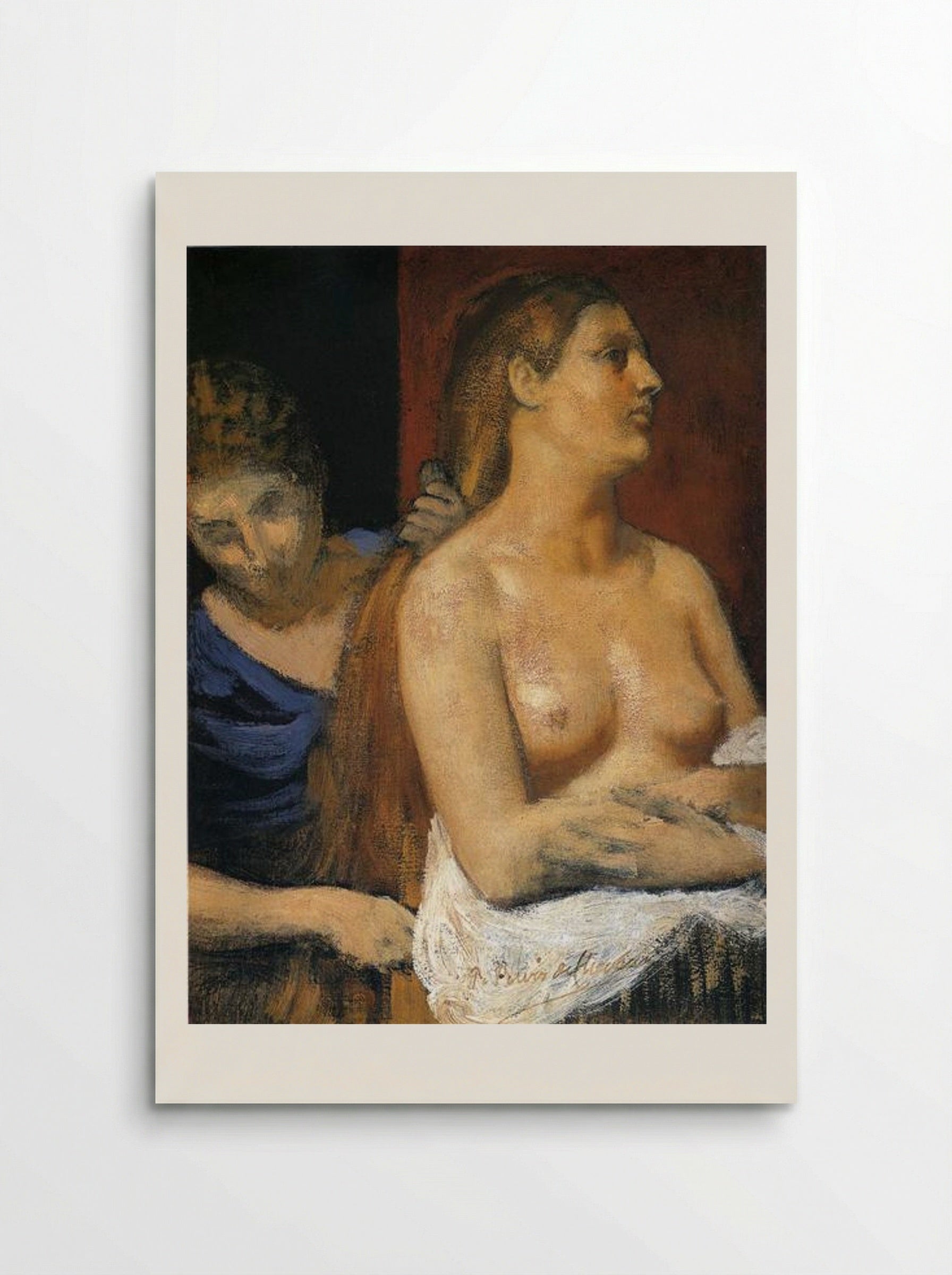 En piga kammar en kvinnas hår - Pierre Puvis de Chavannes
Print
Ordinarie pris Från £28.00 GBPReapris Från £28.00 GBP Ordinarie pris -
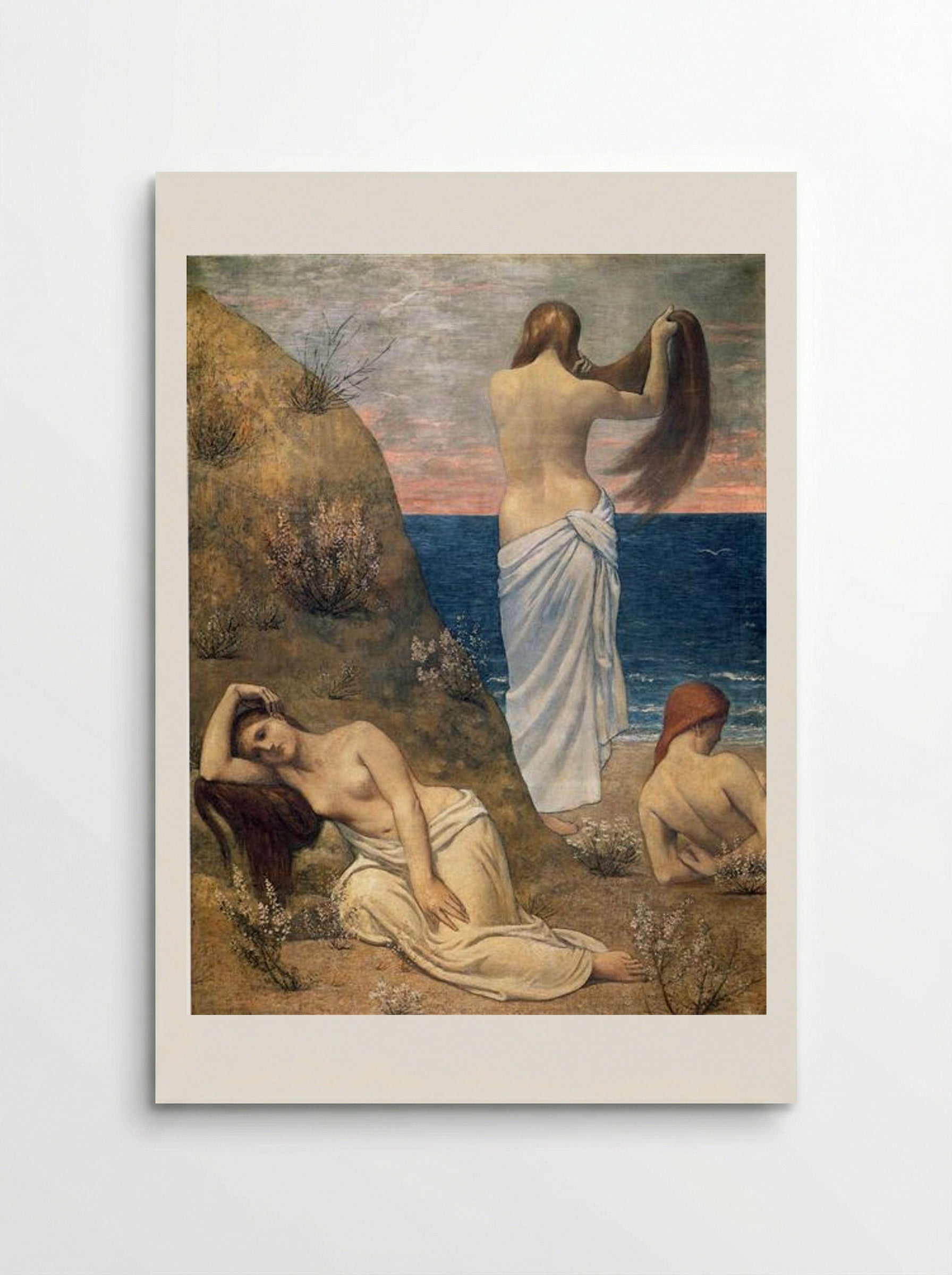 Unga flickor vid havets strand - Pierre Puvis de Chavannes
Print
Ordinarie pris Från £28.00 GBPReapris Från £28.00 GBP Ordinarie pris -
 Sommar (detalj) - Pierre Puvis de Chavannes
Print
Ordinarie pris Från £28.00 GBPReapris Från £28.00 GBP Ordinarie pris -
 Medlidande - Pierre Puvis de Chavannes
Print
Ordinarie pris Från £28.00 GBPReapris Från £28.00 GBP Ordinarie pris -
 Den heliga lunden, älskad av konstarterna och muserna - Pierre Puvis de Chavannes
Print
Ordinarie pris Från £28.00 GBPReapris Från £28.00 GBP Ordinarie pris


Artist Biography
Pierre Puvis De Chavannes
Puvis de Chavannes painted murals for the Boston Public Library without ever visiting Boston. He worked from marble samples and architectural models shipped to his Paris studio, matching pale fresco-like colours to a building he would never enter. The library got eight stairway murals. Boston got a painter who did not need to see a place to understand it.
He was born in Lyon in 1824, the son of a mining engineer from an old Burgundian noble family. He added the ancestral "de Chavannes" to his name himself. A serious illness interrupted his planned engineering career; a trip to Italy redirected him toward painting. Back in Paris he studied briefly under Delacroix, then under Henri Scheffer and Thomas Couture, but developed a style that owed little to any of them: simplified forms, rhythmic outlines, muted colour that imitated the appearance of fresco, applied to large allegorical subjects drawn from antiquity and French history.
His murals at the Pantheon in Paris (begun 1874, depicting the life of Saint Genevieve) and at town halls, churches and civic buildings across France earned him the informal title "the painter for France". The technique was not true fresco but oil on canvas affixed to the wall (marouflage), which allowed him to work in his studio. The pale, flattened surfaces influenced an unlikely range of successors: Seurat studied his compositions, Gauguin absorbed his flat colour planes, Maurice Denis built Nabi theory partly on his example, and Picasso's Blue Period owes something to his chalky palette.
From 1856 he was in a relationship with the Romanian princess Marie Cantacuzene. They were together for forty years, marrying only shortly before both died in 1898.
He was born in Lyon in 1824, the son of a mining engineer from an old Burgundian noble family. He added the ancestral "de Chavannes" to his name himself. A serious illness interrupted his planned engineering career; a trip to Italy redirected him toward painting. Back in Paris he studied briefly under Delacroix, then under Henri Scheffer and Thomas Couture, but developed a style that owed little to any of them: simplified forms, rhythmic outlines, muted colour that imitated the appearance of fresco, applied to large allegorical subjects drawn from antiquity and French history.
His murals at the Pantheon in Paris (begun 1874, depicting the life of Saint Genevieve) and at town halls, churches and civic buildings across France earned him the informal title "the painter for France". The technique was not true fresco but oil on canvas affixed to the wall (marouflage), which allowed him to work in his studio. The pale, flattened surfaces influenced an unlikely range of successors: Seurat studied his compositions, Gauguin absorbed his flat colour planes, Maurice Denis built Nabi theory partly on his example, and Picasso's Blue Period owes something to his chalky palette.
From 1856 he was in a relationship with the Romanian princess Marie Cantacuzene. They were together for forty years, marrying only shortly before both died in 1898.


Varför välja oss?